
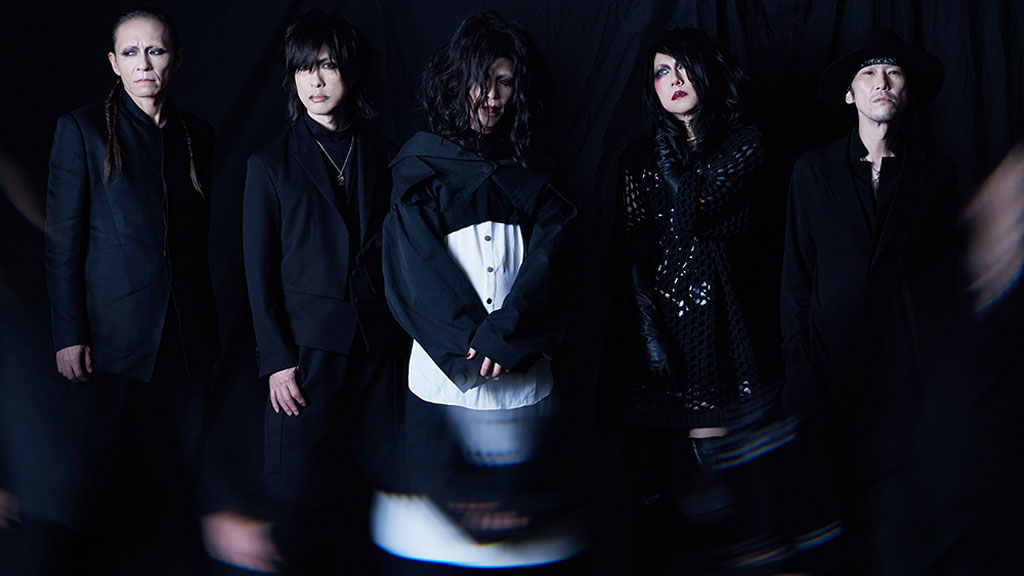
kein on New Album 'Iustitia sine misericordia' After 3 Years: "How Can We Express This With Who We Are Now?"
This interview was originally published in Japanese on barks.jp. Translated by VK Chronicle.
Kein Interview: “Iustitia sine misericordia” Full Album Discussion
Kein released their new full-length album “Iustitia sine misericordia” on October 7th.
◆Original Photography◆
Three years after their previous work “破戒と想像,” this marks kein’s major label debut full album. Packed with everything that makes kein appealing—from darkness to cynicism, to vocal expression and technical musicianship—this is a work you can truly savor. Let’s unravel each song on the album together with the members’ words.
◆ ◆ ◆
Q: The full album “Iustitia sine misericordia” is finally complete. Was this something you developed steadily over time, or did you create it all at once recently? First, could you tell us how it came about?
aie (G): It was kinkin-gyuu (laughs). [playful onomatopoeia for something tight/pressurized]
Reo (G): We started talking about making a full album about a year ago, but we didn’t actually start production until a bit after that.
Q: Before or during production, did you have any alignment meetings within the band about the vision for this album?
aie: Fortunately it went smoothly, so we didn’t really have those kinds of discussions. If at some point when all the songs were done Mako had said “I can’t picture anything,” we might have had to redo it.
Mako (Vo): Huh? Really?
aie: Yeah. In that case we’d have no choice but to remake the songs, so releasing it might’ve been postponed… That’s roughly the pace we were working at. But actually, it ended up being one song more than originally planned.
▲Mako
Q: So production moved forward quite smoothly. That said, on this album aie, Reo, and Shuki all composed individually. Shuki, what was your vision for this album?
Shuki (B): Personally, I wasn’t really thinking about composing in a broad range of styles or anything like that. But first I submitted “Trues,” which is on the very end of the album, and then “Cradle Lull” as the third track. At that point, I felt like I’d satisfied what I wanted to add to the album. “雨音の記憶” is an existing song, and “Jack-o’-lantern,” which I wrote last, was something I made more playfully.
Q: Starting with Shuki’s songs, I notice that on this album each composer’s individuality really shines through—you can tell who wrote what without even looking at the credits. Reo, what were you thinking about during the composition process?
Reo: The two EPs we released after our major debut—”PARADOXON DOLORIS” and “delusional inflammation”—each had different directions. Taking that into account, I think we’d already expanded the framework of what we wanted to put on an album by that point. In other words, the plan of releasing two EPs and then a full album over these three years was already part of the original concept. So this time I composed pretty freely with the idea of “what songs would be good to have on an album?” kind of feeling.
Q: I see. What were you thinking about during your composition process, aie?
aie: All five of my songs have different directions, so if we were making a 10-track album, I made the demos thinking about how to place each one effectively. The way I work is, when I wake up one morning and think “Alright, I’m gonna make a kein song today!”, I first send Sally a demo with just my guitar, then later we go into the studio together, shape it into one song, and do a one-take recording with a boombox. Then I send that to the members.
Q: Do you still use a boombox, aie?
aie: Oh, no, times have changed—I use voice memos now (laughs). The nice thing is you can record infinitely.
Q: When Sally receives the demos from aie, how does she usually respond from there?
Sally (Dr): Even at the demo stage, I can kind of imagine what it’ll be like, so once we’re in the studio together, I work on making each song’s color clearer. But originally there were only about three songs, I think. Once those three were pretty much finalized, we thought “we still have some time,” so we ended up adding two more songs on the spot, making it five demos total. For those two, we just sketched out the bare minimum necessary and sent that to everyone.
Q: So aie’s composition process is different from Shuki’s and Reo’s?
Sally: Shuki and Reo send pretty well-developed demos, while with aie sometimes there’s a demo, but sometimes he just plays the song live in front of us.
aie: I do send demos, but honestly they’re just in this sad guitar-only state (laughs). It’s usually like “You don’t have to listen, just get a feel for the vibe. I’ll explain the rest when we meet.”
Q: Either way, this album has quite different rhythmic feels and structures from song to song, and including the composition process, Sally really adapted flexibly each time.
Sally: Since there were lots of variations this time around, if people had specific images or requests, I’d respond to those. If not, I’d just go with the impression I got in the moment.
Q: Meanwhile, did Mako feel anything as these songs came together?
Mako: I was prepared for curveballs to come, so it was more like “there it is” (laughs).
▲aie
Q: “The Messy-Haired Grimalkin” is really the ultimate curveball. I never imagined kein would release something with such a city pop flavor.
aie: This wasn’t intentional—it just turned out that way (laughs). Originally it was more of an unsophisticated garage rock vibe, but once Sally’s beat came in and Mako added the opening keyboard and melody, it suddenly became very city pop. It developed into something familiar, like the late 80s stuff we all listened to when we were young and impressionable.
Q: Moreover, “The Messy-Haired Grimalkin” is the lead single for “Iustitia sine misericordia,” right? While it’s genuinely an excellent song, it seems like quite a bold choice for kein to put something this pop in that position.
aie: Right? (laughs)
Mako: I think it’s bold too, looking at it objectively. I was like “Are you sure? Is this okay?” (laughs)
Q: Within the context of full album variations that really shine, choosing to put something this upfront is a very fresh approach.
Reo: Rather than saying it’s a lead single that symbolizes the album’s direction, it might be more accurate to say that when we asked “if we were making an MV, which song would it be?”, we picked this one. The whole album isn’t really in this tone, so it’s a different conversation. “The Messy-Haired Grimalkin” is definitely an unusual song for us, I think.
Q: Sally, when you worked on “The Messy-Haired Grimalkin,” what kind of drumming and phrasing did you focus on?
Sally: This song is extremely simple, and for kein it’s kind of accompaniment-focused—you could say I’m pretty faithful to the beat. Since the melody was decided relatively early, I recorded it almost like I was humming along, so I approached it with the image of playing humbly in the background.
Q: “The Messy-Haired Grimalkin” creates that 80s city pop atmosphere, but the bass line makes sure it doesn’t end up as just a pop tune—it really anchors it as a kein song. The slightly awkward dissonance and effective hooks add a uniquely kein flavor to the sound.
Shuki: When I first heard this song, I thought “This is DIE IN CRIES-like.” So initially I wanted to play it with a fretless bass sound and adjusted my setup accordingly, but it didn’t end up sounding like that in the end. But in terms of playing, I’m not starting from the root—I shift it around sometimes. That probably matched accidentally with the sequence Mako added, creating an interesting effect. Personally, I think it has dream pop nuances too, not just city pop—80s British stuff like Cocteau Twins and Slowdive.
Q: That nuance is really effective, and there’s an impressive delicacy to it that keeps it from being saccharine. kein’s new territory.
Shuki: Thank you so much. That makes me really happy.
Q: Reo, as the composer, how did you approach playing “The Messy-Haired Grimalkin” as a guitarist?
Reo: Since aie handles the basic parts, the key was how much sparkle I could add in the background. I’m basically only playing clean tones, and actually this album has a really high ratio of clean and effects compared to distortion throughout. Of course I did record some distortion, but it ended up being like 5 or 7 tracks per song, which made the reamping pretty rough.
Q: aie, as the composer, what were your thoughts when you heard the complete version with all the members’ parts layered together?
aie: “That’s good!” (laughs). It might be totally different from the direction I was going, but that’s not how I would’ve done it. It really brought out the band’s strengths.
Q: So as a guitarist, what approach did you take?
aie: As for the guitar on this song, I think no matter which direction I went, I’d probably play something like this. Because during recording, we didn’t know exactly where Mako was going to sing in the C-section after the chorus, so I played something like a guitar solo based on my intuition. And it fit so well—Mako and I really have a long history together. I think that connection working so well is one of the best moments on this album.
Mako: Yeah, how did you even manage to land it there?
aie: Well, I was like fifty-fifty on it (laughs). Glad it worked out.
▲Reo
Q: With “The Messy-Haired Grimalkin,” Mako essentially changed the song’s direction with that keyboard. Where did the idea to add that piano come from?
Mako: I wanted to add piano at the opening, so I tried it, and then ideas just started cascading—”oh, so then this would work like this,” and so on. But stepping back and listening objectively, there was definitely a “Is this okay?” moment. Obviously I thought it was good since I did it, but “will they forgive me?” (laughs). So at first I presented it like “I tried adding this, but…” As I kept layering things on, I even started to lose track of what I was doing myself. Even after aie said “that’s good,” I was like “are you really thinking that?”
aie: I get that feeling, Mako. When you’re designing something and changing colors in photos, you hit a point where you don’t know where you are anymore. It’s important to look at things objectively, and if you don’t remember where you started, you get lost right away (laughs).
Q: But this song really landed in the best place possible. It’s genuinely a great song, and looking back, it really shows kein’s new potential.
Mako: Phew, that’s a relief.
aie: You know, we’ve done a lot of interviews for this album, but I don’t think we’ve gotten this much praise before (laughs). We keep hearing things like “it’s a dark album” or “it’s a deep album,” but nobody’s really said “it’s a good song” until now.
Q: It’s a song with real universal appeal, and personally it’s my number one pick from the album (laughs). Also, “The Messy-Haired Grimalkin” has a kind of universality in the lyrics too. The line “let’s encourage each other, acknowledge each other” is such a fundamental truth that you’d tell to a child, but I also felt like these are words the whole world needs to hear right now. Because what should’ve been natural isn’t anymore.
Mako: More than telling children, it’s the adults who really need to hear it (wry laugh).
Q: The motif is a cat, and the song and title come from that?
Mako: I have a cat at home that’s a long-haired breed and gets tons of matted fur. You have to brush them constantly, and once it’s tangled, especially on the belly, you have to cut it out. They don’t really cooperate though. Since it’s such a familiar subject, the lyrics came together pretty naturally. Since we’re on the subject, could we get a tie-up for this song?
Q: With a cat motif, how about a cat food CM?
Mako: Oh, that’d be nice. Maybe something with a de-matting product?
aie: What about Vitaone? Wait, isn’t that for dogs? (laughs)
Q: Anyway, there will be an MV released around the album’s release, so we’re looking forward to that. Now, let’s talk about “自壊の肖像,” which is essentially the first song after the SE. Reo, what kind of vision did you have when composing this track?
Reo: The original demo was a bit more nu-metal feeling. The atmosphere was close to the final version, but when we got in the studio and tried it together, it didn’t really click at first, so it evolved from there. At the demo stage, I deliberately leave some room for later adjustment, recording it pretty roughly. So some songs change as we all arrange them in the studio.
aie: “自壊の肖像” was a pretty straightforward song at first. But when I thought about what we’d do with it, I added weird beats in the A-section, and in the chorus instead of speed, I added this heavy, caterpillar-crawling-along-the-ground kind of American nu-metal essence.
Q: Shuki, what did you focus on for the bass in “自壊の肖像”?
Shuki: I added a middle section specifically to settle things down outside the chorus, and I wanted to create contrast there.
▲Shuki
Q: aie mentioned that caterpillar imagery earlier. Sally, what did you pay attention to with the drums on “自壊の肖像”?
Sally: The intro goes full throttle then suddenly gets quiet, the A-section has a bit of a tricky vibe with accents, and I create dynamic tension with things coming in and out, then the chorus opens up.
Q: This track title feels like it condenses the lyrical content. Mako, please tell us what you poured into this.
Mako: I wanted to make the title like Anzen Chitai.
Q: You were thinking of “プルシアンブルーの肖像”?
Mako: Exactly (laughs). The lyrical content is about how people gather around someone they perceive as special or brilliant and direct jealousy at them.
Q: The word 〈冷笑〉 that appears in these lyrics has roots going back to the 14th century as a Chinese loanword, but in recent times it’s become common on SNS. A generation or two ago, you’d see more sarcastically warm expressions like “watching over them gently,” but 〈冷笑〉 is colder still. It feels terribly harsh.
Mako: I think the essence probably hasn’t really changed—it’s just that the theatrical element has gotten stronger. It’s a situation where people are just maintaining appearances. I think that’s what it is.
Q: The phrase 〈見ない自壊の業火〉 was really thought-provoking too.
Mako: With light or illumination, sometimes people don’t realize it’s fire. There might be cases where the fire insects swarmed toward was actually fire they set themselves. When people criticize others or throw around harsh words, it often comes from pain on the part of the person speaking, but in the end it looks like they’re just burning themselves. I wrote these lyrics with that image in mind.
Q: By the way, before “自壊の肖像” there’s a SE-like instrumental called “Superbia.” Were these two songs coordinated together?
Reo: “Superbia” was written with the intention of coming before “自壊の肖像,” and I titled it with the album’s overall title in mind.
**Q: aie, your composition “