
This Summer, Europe's Largest Visual Kei Event Comes to Paris: Producer Bertrand Torpédo on the Appeal of Visual Kei
This interview was originally published in Japanese on barks.jp. Translated by VK Chronicle.
Interview: Europe’s Largest Visual Kei Event Coming to Paris This Summer—Producer Bertrand Torpedo on the Genre’s Appeal
Visual Kei, a content format originating in Japan, boasts a strong and enduring fanbase overseas. With band members’ appearances reminiscent of anime and video game characters, it can truly be said that Visual Kei is one of Japan’s proudest subcultures.
For roughly 20 years, French live producer Bertrand Torpedo has been supporting Visual Kei artists. This year, marking the milestone of his 20 years of activity, he’s organizing an event in Paris bringing together Japanese Visual Kei artists—
◆ ◆ ◆
Q: First, what was the turning point that got you interested in Visual Kei, which originated in Japan?
Bertrand: The first Visual Kei band I ever saw was DIR EN GREY, who performed at the German festival Rock Am Ring around 2005. I had no idea who they were at the time, but I was completely shocked. Then in 2006, I worked with a band called Dio. They had an incredibly crazy look, and of course I didn’t know them either, but their live show was completely sold out, and the audience was going wild. That was already 20 years ago.
Q: So Visual Kei made a huge impact on you.
Bertrand: Absolutely. Because they were completely different from any band I’d seen before.
Q: Many Japanese Visual Kei bands have been influenced by Western music, but what kind of differences did you notice? For example, their makeup seems to evoke anime and video game characters. Western hard rock bands tend to have demonic makeup and macho members, so that’s probably a pretty significant difference.
Bertrand: Exactly! I was really surprised by that. Especially when members took off their makeup and costumes, they had a completely different, much more quiet atmosphere. I think for Visual Kei bands, makeup and costumes are extremely important elements. Having dedicated makeup artists was fresh too. You mentioned earlier the differences between Visual Kei bands and Western bands, but for me, Visual Kei is completely unique to Japan. The way reggae symbolizes Jamaica, Visual Kei is 100 percent music that symbolizes Japan. Even if a European band made music like Visual Kei… which would be great, but it fundamentally wouldn’t be the same as the original Visual Kei. Visual Kei is truly Japan’s original creation.
Q: That’s nice to hear (laughs).
Bertrand: I think Visual Kei’s sensibility is something to be proud of. It might not be particularly commercial, and it might not be music that appeals to everyone, but for fans it’s a proper genre and a community.
Q: It seems like in Europe, particularly France, Visual Kei is accepted even among younger audiences. What aspects of Visual Kei do you think they’re drawn to?
Bertrand: Since I got involved with Visual Kei 20 years ago, I honestly don’t fully understand how people came to know about it. I think it was mostly through magazines, internet websites, and then through fans themselves starting to organize tours. However, Visual Kei was doing quite well in France until around 2015, but after that, popularity started to decline. But recently, we’ve started organizing Visual Kei concerts again, and I think with the development of social media like TikTok and Instagram, that’s created a new wave of Visual Kei.
Q: It’s been said that there’s a Visual Kei revival happening recently in Europe.
Bertrand: Personally, I think music has cycles. Any genre has them. Visual Kei has its cycles too, and that might be leading to what’s happening now. Also, I think it’s because several bands have continued their activities without giving up. Some bands have even made comebacks after long intervals. I’m staying in Tokyo right now, and I saw a D’ESPAIRSRAY live show yesterday. They’re a reunion band too, and their tickets were completely sold out.
Q: For younger fans who didn’t experience it in real time, reunion shows must be exciting. Some people are seeing them for the first time. And I’m sure some people found out about them because YouTube recommended videos. The power of the internet really is significant.
Bertrand: Right. Social media like TikTok and Instagram definitely have an influence.
Q: By the way, do you have a favorite Visual Kei band, Bertrand?
Bertrand: Personally? Actually, I don’t particularly have a specific band I like.
Q: Really? Is that so!
Bertrand: Because I work with a huge number of bands, and as a producer discovering various bands, I know that each band’s musical style is very diverse. For example, LM.C makes very catchy, pop music, and while the GazettE and Versailles make intense music, there are individual songs from each that I like.
Q: So you prioritize song quality.
Bertrand: However, all the bands I’ve worked with are wonderful people, and when we tour together, we share enjoyable times. As a professional, I respect all the artists I’ve been involved with, and I respect their fans too. In that sense, I think I’m able to work very fairly with everyone.
**Q: Now, on July 11 and 12, a two-day event is being held in Paris called
Bertrand: I got involved with this scene in 2006, so it’s exactly my 20th anniversary. And Visual Kei is extremely important to me. That’s because I’ve organized overseas tours for many bands. But doing such a large-scale event definitely wasn’t easy. Each band had their own schedules. However, when I reached out to them, most bands gave very positive responses. The performing bands range from pop to gothic, symphonic metal, and metalcore—different musical styles—so I think it turned out to be a really good balance. Personally, I’d like to do something like this in Tokyo as well.
Q: Japanese band members who have already performed live in Europe have said things like “European fans were passionate” or “I was happy they sang the whole thing out loud.” Japanese audiences are enthusiastic too, but fans don’t really sing along for entire songs. I think that difference is interesting.
Bertrand: Japanese audiences seem to enjoy shows with a lot of respect. Europe is just crazy—people go wild and get completely out of hand—but I think experiences like that really stay in the hearts of Japanese bands.
Q: It’s wonderful that Japanese band performances get so much energy from overseas audiences. But Visual Kei as a genre has a subculture aspect to it. What do you think is necessary for this genre to step up further?
Bertrand: That’s a difficult question. For example, if Visual Kei bands lifted their live filming restrictions… in Japan, live filming is basically prohibited, right? If it became OK like with K-pop groups, it might spread more. As a producer, so that Visual Kei bands can become bigger, I’m hoping through this festival to open more windows to the world for Japanese bands.
Q: Overseas, filming being allowed is standard, and fans normally spread content—
Bertrand: For Visual Kei, visuals, makeup, costumes, and image are all very important. They might not like having off-shot photos taken in the dressing room, but I think the band’s image is extremely important to them.
Q: There might also be the language barrier.
Bertrand: Actually, if they could speak English, there would definitely be more potential for worldwide expansion.
Q: On the flip side, many European fans seem to study Japanese. But wouldn’t bands be better known if there was communication?
Bertrand: At minimum, being able to speak English would be better. But I don’t think the lyrics need to be in English. Of course, English makes things easier to understand, but European fans of this scene already know the value of what’s Japanese.
**Q: In that sense, I really hope
Bertrand: This is the first one (laughs). But I’m not rushing things, so I want to think it through carefully. However, like we mentioned about the Visual Kei revival, I really think this event came at the perfect timing.
**Q: I’m sure some bands couldn’t participate due to scheduling conflicts, so hopefully there will be another opportunity. By the way, aren’t there Japanese fans participating in
Bertrand: So far, about 160 people from Japan have purchased tickets.
Q: Japanese fans have many opportunities to see bands, but it’s wonderful that they’re making the trip to support them!
Bertrand: For this event, we booked 9 bands, but we actually picked a 10th band through an audition. Japan has tons of small live houses, and lots of bands do multiple band shows at small venues, right? I’m really looking forward to being able to introduce new, lesser-known bands. I think that kind of thing becomes a good adventure for everyone involved too.
Q: For a band to win an audition and get the opportunity to perform in France is a wonderful chance! Finally, could you give a message to Visual Kei fans both in Japan and overseas?
Bertrand: Some bands couldn’t participate this time due to scheduling conflicts. Even so, I’m confident this lineup is amazing. It’ll be easy for Europeans to participate, so please come. This festival is Europe’s first of its kind, and it’s definitely a worldwide event. I want to expand all these fans and bands to the world. I hope through this event to be helpful to Visual Kei bands and revive this genre. If possible, I’d like to continue this kind of work going forward.
**
[Ticket Information] https://www.envolprod.com / https://shotgun.live/en Event Details: https://www.envolprod.com/b7klan-jrock-fest
[Profile]
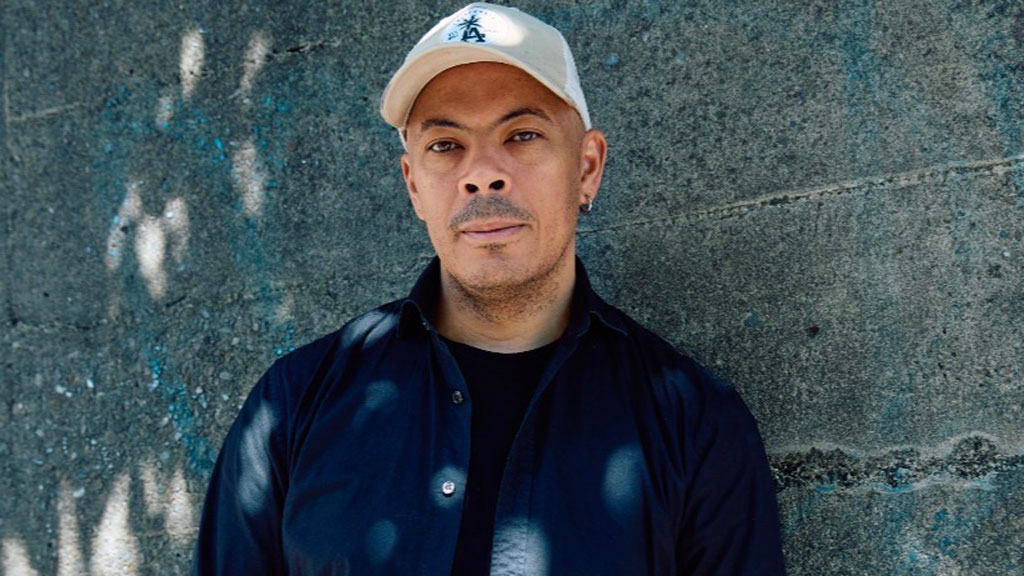
Bertrand Torpedo
Bertrand Torpedo is a French live producer and international tour promoter based in Paris. Since 1998, he has produced concerts and tours for artists worldwide, working with numerous artists including the Black Eyed Peas, Gloria Gaynor, and Youssou N’Dour. Since 2006, he has focused on the international expansion of Japanese artists, producing European performances for ONE OK ROCK, ASIAN KUNG-FU GENERATION, RADWIMPS, MAN WITH A MISSION, Joe Hisaishi, and others. He is known as one of the pioneers in the international promotion of Japanese music. As he marks his 20th anniversary of work with Japan in 2026, he is organizing “B7KLAN J-ROCK FEST,” themed around Visual Kei culture, as the culmination of his efforts, to be held in Paris on July 11 and 12.