
Azavana on Their Debut Full Album and the Band's Journey to Now: "Everyone is Living While Carrying Different Things"
This interview was originally published in Japanese on barks.jp. Translated by VK Chronicle.
Azavana’s First Full Album: A Band’s Journey to “This City Where We’ve Drifted, Wanting to Live”
Azavana released their first full-length album, “This City Where We’ve Drifted, Wanting to Live” on March 12th. At Zepp Shinjuku, the final show of their one-man tour <Heartbeat> which has been running primarily in the Kanto region since early 2026, they performed a live set that gave an early glimpse of the album’s world. Starting in April, they’re holding the <1st Full Album Release Tour “This City Where We’ve Drifted, Wanting to Live”> at CLUB QUATTRO locations in Tokyo, Nagoya, and Osaka, diving even deeper into the meanings embedded in the album.
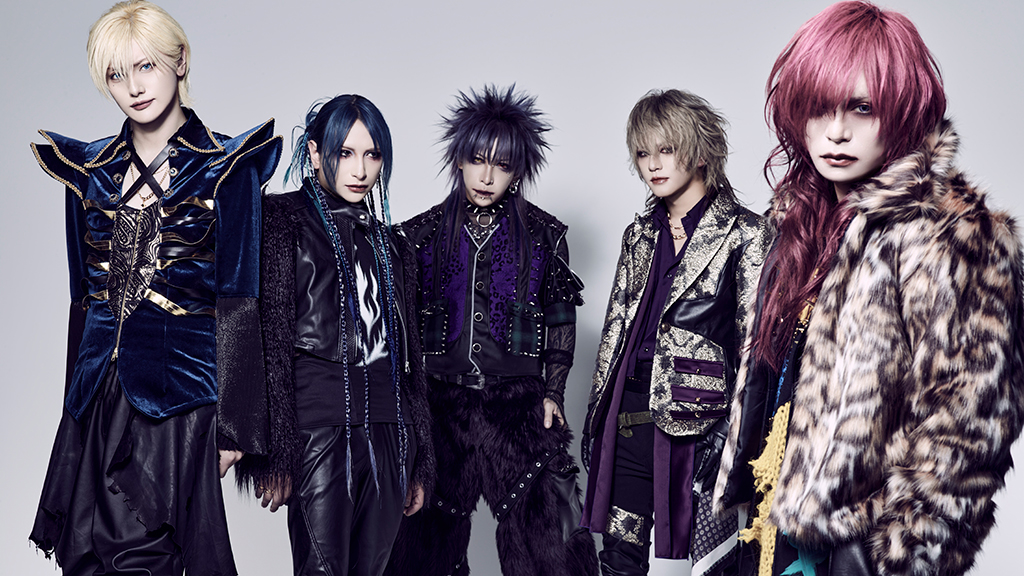
What Azavana has depicted in their 1st full album “This City Where We’ve Drifted, Wanting to Live” is the band’s trajectory from past to present and the story that connects to their future. While redefining what the album format means, the work is etched with feelings and sounds that only they, as they are now, could express. We bring you an interview with Ryo (Vo), Shiyuu (G), and S1TK (Dr), discussing the production background and every single detail of each track.
Individual Weapons United as One: Members from Different Bands Moving Forward Together
Q: First, could you share your honest impressions now that Azavana’s first full album “This City Where We’ve Drifted, Wanting to Live” is complete?
Shiyuu: The production period coincided with our one-man tour, so it was pretty hectic. But when I heard the finished product, I honestly thought, “We’ve made a really good album.” There’s real substance to it as an album, you know? I think the culture of listening through an entire album has faded somewhat in recent years.
Q: That’s true in this streaming-dominated era.
Shiyuu: But I think we’ve managed to reclaim that sense of “meaning across an entire album” in a contemporary way.
S1TK: The biggest feeling after completing the album was a sense of accomplishment. I was present during the mixing process, and there were moments where I’d think, “That demo turned into this?” — discoveries about the songs themselves, and new discoveries about the members’ approaches. I really felt how life gets breathed into songs during the production process, and with all that in mind, it’s a genuinely good album.
Q: Album production must have been demanding alongside everything else. How did you feel about it, Ryo?
Ryo: The schedule was incredibly intense — like recording until morning and then heading straight to a one-man live. It was nothing I’d experienced before. But because it was our “1st album,” I was fired up about it.
Q: What kind of blueprint did you have for this “1st album”?
Ryo: First, the title “This City Where We’ve Drifted, Wanting to Live” comes from the lyrics of our first single “Fireflies Swimming in a Gray Sea.” When we formed Azavana, I made that song to express our feelings. The members had all been in different bands before, each carrying their own experiences and things they’d cultivated. The message was about bringing all of that together and moving forward as Azavana. We cherish our past intentions, and the place we’ve arrived at is this band, Azavana. I wanted the album to be like a business card for the band. In the end, we achieved a result I’m satisfied with.
Q: With that clear vision, how did you proceed with production?
Ryo: I didn’t want to just hold a song selection meeting and throw together whatever we’d created. I made that clear to the members from the start. It’s about the song order where every track — including singles — fits together as a piece of the puzzle, and how listening from beginning to end creates a narrative flow. We really focused on that.
Q: That’s the “meaning across the entire album” you mentioned, Shiyuu. So let’s go through the tracks in order. The first song is the instrumental “「」” — it was also performed as the opening song at Zepp Shinjuku, the final show of the <Heartbeat> one-man tour.
Ryo: We took the SE we’d been using at the regional <Heartbeat> tour dates and mixed it with band performance. Starting with drums, we layered sounds one by one so that everyone’s sound eventually became one. For the title, I want each person who listens to the entire album to decide what it means to them. So instead of giving it a title, I wrote it as “「」.”
S1TK: I also wanted a song where sounds layered one by one — drums, then bass, then guitar — so having that as the album’s SE is stylish and cool.
Shiyuu: Within each short section, the members’ individual characters come through in the playing, I think. At the Zepp Shinjuku show, just like on the album, we flowed from “「」” into “Erica,” and we were able to perform it with a nice sense of tension.
Q: That flow was part of your conception from the start, Ryo?
Ryo: Yes. “Erica” was made with the connection from “「」” in mind.
Shiyuu: When Ryo’s demo for “Erica” came in, Ryohei (G) arranged it first. At that point, the low riff was upfront, giving it a pretty hard rock vibe. Then Ryo requested something more fantastical, and the arrangement came to me, resulting in what we have now.
Ryo: I told him to keep the verse restrained and explode in the chorus. For the guitar arrangement, I didn’t want to overwork it in the demo — I wanted both guitarists to really inject their personalities into it.
Shiyuu: I took a shoegaze approach overall, creating atmosphere with a sweeping wall of sound in the background. The clean tones on both sides of the B section are pretty striking too, I’d say. The bass is driving the chord progression there, and the twin guitars function as decorative notes on top.
S1TK: For drums, following the song’s flow, I focused on how I used the hi-hat in the A and B sections to create a sense of speed. The drums give me a lot of freedom too, so I’m always mixing in whatever’s my current obsession or approaches I haven’t tried before.
Q: “Erica” is a flower name, right? It’s interesting that after “Cattleya,” which is also part of Azavana’s origins, we have another song with a flower name.
Ryo: The flower language of erica is “loneliness” and “solitude.” I wrote it touching on the past, expressing how that connects to the present. That’s also why it’s in this position on the album.
Shiyuu: By the way, Ryohei was like, “Who the hell is Erica?!” (laughs).
Q: That sounds like Ryohei (laughs). When you say “this position,” does that include where it leads into “Fireflies Swimming in a Gray Sea,” the third track?
Ryo: Yes. The flow from “Erica,” which touches on the past, into the “now” of “Fireflies Swimming in a Gray Sea” — we decided that from the beginning.
Q: I’ve been wanting to ask: what does the motif of “fireflies” mean to you, Ryo?
Ryo: “Fireflies” is a word I’ve used before. I feel a strong sense of transience and life in fireflies, so it’s become a theme for me.
Q: A kind of symbol of “life,” in a way.
Ryo: Exactly. The “fireflies” I’ve always championed — and the instrumental side originally operated under a band name meaning “gray maze” — so “Fireflies Swimming in a Gray Sea” is a title that represents both elements.
Q: Following “Fireflies Swimming in a Gray Sea” is “TATTOO.”
Ryo: We didn’t have many dark atmosphere songs, so I created one. We wanted to include unconventional rhythms too, and we played around a bit with some fresh sounds we hadn’t used before.
Q: There’s definitely an ethnic vibe, and the vocals are sensual too. That guitar approach really emphasizes those elements.
Shiyuu: The most striking thing is probably the noisy, playful phrases using pedal effects from the intro onward. But actually, the tricky part to arrange was the arpeggio on the A section’s underside. Playing between the melody line and synth phrases to connect them — we crafted that carefully. It’s a song where avant-garde wildness and meticulousness coexist. And what Ryo was most particular about was that clean tone call-and-response part at the end of the first chorus.
Ryo: Twin guitars trading arpeggios back and forth isn’t something we’d done much, so I had it in from the composition stage.
Q: The drum intro is a key element too.
S1TK: We wanted a song that started with drums, so I thought, “Ryo, nice!” “TATTOO” is a song that fits wherever you place it in the live setlist, so I kept the drums pretty simple to not break the momentum, while adding my touches at key points. The A section is 16-beat, but where a normal drummer would use one hi-hat, I’m using both L and R hi-hats. They’re smaller in size so they’re tight with good articulation, and it brings a liveliness even to a standard beat.
Q: “TATTOO” also has a vital bass part. As the rhythm section, how was the overall album experience for you?
S1TK: Ryuu (B) and I have been playing together a long time, so we have that unspoken understanding. That’s why I can trust him to handle things, and I think he feels the same way. We have completely different personalities, but whether live or on recordings, we sync up really well.