
Alternation of Generations: "We Want to Push the Limits of What's Technically Possible with Human Performance While Keeping It Fun"
This interview was originally published in Japanese on barks.jp. Translated by VK Chronicle.
Progressive Pop Band Challenging the Limits of Human Performance in the Reiwa Era: Alternation of Generations
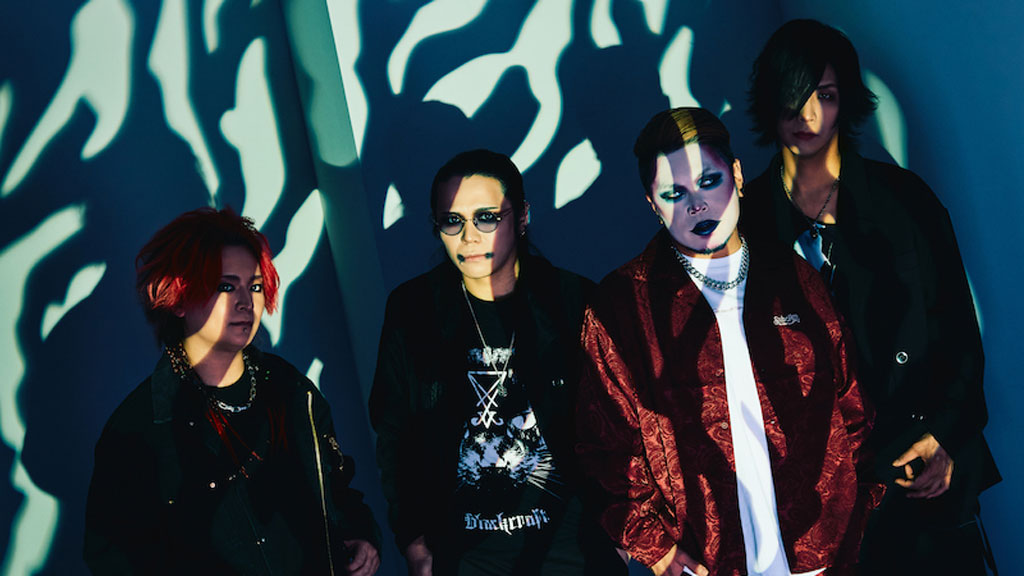
Alternation of Generations is a progressive pop band challenging the limits of human capability in the Reiwa era.
The band features DANCHO, who also works as NoGod, on vocals; YOSHIHIRO (G), a guitarist and main composer formerly of Guild; Ryosuke (B), a bassist who participates in numerous projects; and FUMIYA (Dr), the drummer of Unlucky Morpheus—an incredibly powerful lineup.
Alternation of Generations has now released the EP REVOLVE, their first in approximately four years. The intense playing and hybrid rock sound characteristic of this lineup brings fresh surprises to music today.
Q: First, could you tell us again about how Alternation of Generations came together?
YOSHIHIRO (G): It was before COVID started, I think. After running into DANCHO at some event, we ended up talking at a hormones restaurant, and that’s when the conversation about doing a new band came up.
DANCHO (Vo): YOSHIHIRO had been doing a lot of composer work after leaving his band, but I knew well his guitar hero side and technical abilities from before. I’ve been continuously working with NoGod, but even with NoGod there are limitations—things we can’t do. Like, we basically don’t do music with synths or strings. YOSHIHIRO is always researching new music and expressing it, so I thought it would be good to have a project where he could fully realize the knowledge and skills he’s cultivated. That’s what got us excited about it.
YOSHIHIRO: At the hormones restaurant, yeah (laughs). When we started talking about who the other members should be, I immediately called Ryosuke right there.
FUMIYA (Dr): You called him right then? (laughs)
YOSHIHIRO: Yeah. I mean, calling someone right there is questionable too, but Ryosuke is incredible for saying “I’m in” without thinking the moment he heard about it (laughs). I was prepared to have to convince him, but he gave an immediate answer.
Ryosuke (B): Well, it sounded fun (laughs).
FUMIYA: Did you call without the musical direction even decided yet?
DANCHO: We had definitely decided on one thing—that it would be music technically surprising to everyone. What YOSHIHIRO and I were vaguely saying at the time was something like a “hellish quartet” vibe. Basically, we wanted to present music that makes kids think, “What is this? Can humans actually do this?” Given all the talk about kids not picking up instruments, we wanted to showcase technically extreme capabilities achievable through human power, while still making something enjoyable for young people today. But then the question became: is there anyone willing to do this kind of thing?
YOSHIHIRO: Exactly.
Ryosuke: Well, turns out there were, right here (laughs).
Q: And then FUMIYA was decided as the drummer?
FUMIYA: My path was a bit different from what you’ve heard so far.
YOSHIHIRO: Originally, the lineup was completed with a different drummer, and we started making demos, began recording, and had some live dates already set.
DANCHO: In that situation, the drummer gave up. Said it was too heavy for him. With everything already in motion, we wondered if there was anyone willing to actually play these drums, and for me, only one person came to mind. I immediately contacted FUMIYA and explained—we’ve started this band, and the songs are like this—and he said, “There’s no one else but me, right?”
FUMIYA: He said it was quite a tough band, but it sounded fun to me. I have Unlucky Morpheus as my main project, and that band does metal prioritizing clarity. I’ve always been looking for a field where I could express more of my ego as a player. Plus, at that time I was juggling several metal bands, but even within that there were things I couldn’t fully express—I wanted to do something specialized on the player level. When Alternation of Generations came up, it aligned perfectly with what I wanted, and given the circumstances, I thought, “This has to be me.”
YOSHIHIRO: Wasn’t it initially just a support gig?
FUMIYA: Yeah. They said it could be support, but I asked to do it as a full member (laughs).
Q: The ideal four-piece came together. So let’s talk about the latest EP REVOLVE, keeping everything you’ve just shared in mind. Did you have any themes or concepts when making this?
YOSHIHIRO: We didn’t really think about any particular concept. We released P.O.P in September 2022, and after doing the one-man tour following that, I felt: we’re doing complicated music, but surprisingly we can pull off live shows. With that momentum fresh, I started writing songs, and I think by the following spring we were doing demo listening sessions. So this time, with the previous work in mind, I’d say we were conscious of the live aspect. Also, looking back, I thought we might steer the sound more symphonic.
Q: Technical music can sometimes become “songs just to show off technique,” but Alternation of Generations has exceptionally high song quality. It’s worth noting that you can compete on songwriting alone, and then add high-level technique on top of that.
YOSHIHIRO: When I was around twenty, I was searching for technical music, which naturally led me to Western music. But I’m a huge J-POP fan, and when I listened to Western rock, the technical side was really cool, but the vocal melodies weren’t, I’d think. Or conversely, the melody was good but the technical side felt a bit lacking. So with Alternation of Generations, there’s a big desire to make the music I wanted to hear back then.
Ryosuke: When we formed this band, I said I wouldn’t do it if the songs weren’t good. Playing with this level of technical prowess requires significant sacrifice, so if the original songs aren’t good, I can’t stake my life on it (laughs). So when I’m practicing at home, I might mutter, “What is this guy doing?!” (laughs), but ultimately YOSHIHIRO’s songs are so good that I think, “Fine, I’ll do this!”
Q: REVOLVE has catchy songs that even non-musicians can enjoy. Since you’d like to discuss specific tracks, could each of you mention a song from REVOLVE that left a particularly strong impression?
Ryosuke: I’d say track 4, “Luminous.” I think it has the most substance from a bass perspective. There’s a bass solo and high-speed unison with the guitar, and then we do it one more time at the very end. That was my suggestion (laughs). We did the same thing on the previous album—I don’t learn, huh? (laughs)
Q: I think not learning from that is actually good (laughs). Throughout the entire album, you’re playing phenomenally demanding bass, but the way you create dynamics is exquisite.
Ryosuke: I’m not sure… Basically, I’m playing “bwaaaah!” throughout, and I think I’m only playing root notes for about a minute total (laughs). Personally though, I enjoy weaving phrases between the melodies—I don’t like just keeping it messy in the background all the time. That’s something I’m conscious of. Also, I want the bass to feel catchy too, so I’m thinking about how to play the catchiest bass possible.
DANCHO: The thing that’s crazy about Ryosuke is he’s doing all this with just two fingers (laughs).
YOSHIHIRO: Right. That speed with two fingers is kind of abnormal (laughs).
Ryosuke: Really? I think anyone could do it without the two-finger restriction.
Everyone: No way! (laughs)
Q: It’s a pretty high bar, but I’d really like kids who love technical bass to try copying this.
Ryosuke: Yeah, I’d like that too.
FUMIYA: Including the live performance aspect (laughs). Our guys all move crazy when we perform live.
Q: The level is too high (laughs). Going back to “Luminous”—the song is melodic, with delicate intro, dramatic and emotional chorus, and lyrics about “life doesn’t go well, but I’ll walk the path I believe in.” The song itself has incredible completeness.
YOSHIHIRO: “Luminous,” like I mentioned earlier, was written right after the P.O.P tour. As I was working on it, I had a feeling—not that it’s the title track, but the melody would probably really resonate with Japanese listeners. Still, as the band’s style, we couldn’t just leave it at that, so the performance became pretty crazy (laughs). But ultimately, I was careful not to lose the song’s emotional impact. The dramatic resonance of the chords in the background absolutely couldn’t die. I was really particular about the placement of notes where the unison phrases begin.
DANCHO: With “Luminous,” I think we spent the most time on lyric rewrites out of all the tracks. YOSHIHIRO works on a lot of projects and collaborates with various lyricists, and he had a very clear vision for the direction and tone of this song. “Luminous” and “REVOLVE,” the first track, are both core songs, and they’re close in position, so there was the question of differentiation. Plus, YOSHIHIRO asked if we could add more words that would catch younger listeners’ ears, more surprising vocabulary. And then we spent a huge amount of time calibrating the final tone—it couldn’t be too happy, and it couldn’t be too despairing either.
Q: You have a long career, DANCHO, and you could definitely push back against others’ requests and say “this is my style,” but it sounds like when asked to do something, you want to deliver.
DANCHO: Especially with this band. Basically, if you don’t exceed what every other member is putting out, you get left behind. So when someone asks you to do something, you gotta come back with 1.5x, 2x, 3x what they asked… it’s a kind of pride. If they think “this person can’t do what I’m asking,” then you’ve lost. I think that’s what bonds this band together. The ability to form a band where everyone can say to each other, “I’m doing this much, so you do it too!”—that’s rare. So responding to members’ expectations by exceeding them is something I take seriously.
FUMIYA: Honestly, after live shows we’ll say stuff like, “You could go harder, right? The way you were tonight was wasted potential.” I love all the songs on REVOLVE, but if I had to pick one, it’d be track 5, “Lost Child.” It’s the most mechanical track on the EP, with a kind of cold atmosphere. The drums use modern metal-style phrasing, but my playing style is to differentiate between different cymbals and do a lot of “whoosh whoosh, click click” kind of approaches. This song lets me use that abundantly, and even when melody comes in, the hi-hat sixteenth notes are delicate. That coexistence makes the live difficulty feel highest. Modern metal drums tend to be pretty basic and uninteresting, so I’m putting my own flavor into this song. I’d be happy if people pay attention to that.
Q: What’s striking about FUMIYA’s drumming is that alongside being technical, there’s a lot of approach that deepens the song’s atmosphere.
FUMIYA: That’s what I think about most. The direction of my playing, the push and pull—I think a lot about that. I believe the main melody has the highest priority in a band, so I never want to destroy it. When someone’s singing a great melody, I’d never clutter it up. That sense of balance comes from being in this genre for so long—it’s something developed over the years. The desire to “show technique” includes technique as a band drummer, and I don’t think flashy playing is the only kind of technique.
YOSHIHIRO: “Lost Child,” I remember making the basics while doing the 2022 tour. So it was created early, and the theme was: how can we interpret modern metal in the Alternation of Generations way? I remember that distinctly.
Q: The interpart definitely has a bit of djent flavor, doesn’t it?
YOSHIHIRO: Yeah. That’s where I put the contemporary feel. I think we successfully merged modern metal’s sensibility with a melodic chorus.
DANCHO: Like FUMIYA said, the song has a cold atmosphere, so the lyrics became that way too. It’s about loneliness, but there are like ten different levels of loneliness, and we had to decide whether to provide salvation at the end or not. Originally it was complete despair, but there was a request to show just a tiny bit of light at the end. So I rewrote it and got told, “That’s too bright!” (laughs) I don’t usually do cold songs like this, so I wasn’t sure about the balance. But the overall image and structure came together pretty quickly—it was mostly just fine-tuning the details. For this song, we prioritized increasing the coldness compared to the others.
Q: You mentioned “precision,” and the vocal work on this album, with its varied expressions, nuances, and dynamics, is also a major listening point.
DANCHO: “Lost Child” especially, but this time it really shows in the vocals. This band—everyone records at home, including drums and vocals. When I record vocals, YOSHIHIRO comes to my place, but this song wasn’t originally sung this emotionally. Because from years of experience, I believed that over-inflecting vocals in recordings isn’t good, and singing cleanly is the right answer. But YOSHIHIRO isn’t like that at all—he’s the type who says as long as the take is good, anything goes. With that advice, I really inflected the vocals a lot.
Q: I understand. Songs like “Lost Child” and the chorus of “Day After Day” have this kind of “passionate vocal” quality, and you can taste a new charm from DANCHO.
DANCHO: On NoGod records, except for live, I’ve never sung this way. When I recorded “Lost Child,” I was a bit unsure if this was okay, but when I finally heard it, I realized—this is totally fine, and actually I can do even more next time. YOSHIHIRO would say stuff like, “Just ignore the pitch and just convey the feeling—sing that way.”
YOSHIHIRO: Listening to recent metal, it all feels really clean to me. The pitch is perfect, the rhythm is super tight, and I’m not criticizing that, but there’s something that feels off about it for me. With Alternation of Generations, from the drum recording stage, we kept all the slight rhythmic shifts—things that normally would get a retake. FUMIYA’s sound output is hands-down the most human among us, and that’s the appeal. So I thought we should definitely ride on top of that. I’m and Ryosuke are both the type good at playing just with the click, but we decided to match FUMIYA’s drums instead.
Ryosuke: So the bass recording was hell (laughs).
FUMIYA: Probably was (laughs).
Ryosuke: As we progressed through the recording, I got the feel for it, but overall it was rough. The previous one was different.
YOSHIHIRO: Remember at the beginning when we talked about the drummer quitting? The drum recording was actually done by that point. So the drum player changed and we completely re-recorded the drums. Last time, FUMIYA matched to the click when recording. So this time was the first time we could really use FUMIYA’s humanity, and that’s been really great. Once you have a human take like that, the vocals have to be as human as possible, right? So I had DANCHO sing that way, and it turned out amazing—I thought, “Why aren’t we doing more of this? It’s such a waste.”
DANCHO: Metal gets the criticism that if you sing emotionally you’re bad at it (laughs). But I’ve always thought that’s not true, and this band lets me say yes to that, so I want to push it further.
Q: YOSHIHIRO and DANCHO, would you also mention standout tracks for you?
YOSHIHIRO: I’d say “THE M@D SHOW.” Metal bands have symphonic strings all the time, but big band feel, sophisticated brass and that kind of thing? I don’t think many have that (laughs). Actually, the demo for this song has existed since 2017. So years ago I just thought of something and wrote it, and when we were ready to make new Alternation of Generations songs, I thought that might work, so I pulled it out and packed in all the entertainment we can do now.
Q: For a metal-based band that emphasizes technique, the idea of incorporating big band elements is pretty unusual.
**