
wyse on Refining the Past: The Intent Behind Their 2026 Tour "Calm+" — "We're Turning Up the Heat"
This interview was originally published in Japanese on barks.jp. Translated by VK Chronicle.
wyse Interview: “We Will Turn Up the Heat Even More”
On February 14th today, wyse—celebrating their 27th anniversary as a band—held two live performances throughout the day at Tokyo’s Shinjuku ReNY, titled the “27 Miracles” Anniversary Performance. Throughout the 27 years they’ve accumulated, wyse finds themselves in their best state ever, a sentiment echoed in this interview. The venue was filled with a festive atmosphere overflowing with exceptional sound, performance, and energy that proved it.
In 2025, wyse retraced their starting point by holding an indie era song revival tour <1999-2001>, and appeared at the major event
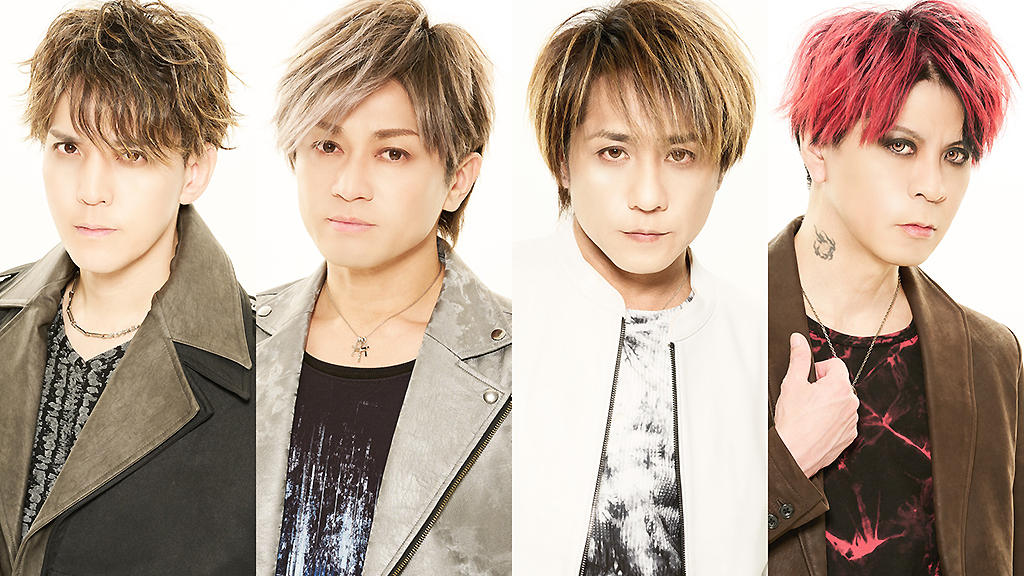
And wyse’s 2026 plans were announced today: the band will hold a nationwide tour <wyse Live Tour 2026 『Calm+』> visiting 8 locations starting May 30th. This tour will focus on the album 『Calm』(2002), which became the catalyst for wyse’s success in the major music field. It marks the beginning of a new journey—examining the past and connecting it to the future of wyse. BARKS spoke with the four members—月森 (Vo), TAKUMA (2nd Vo, B), HIRO (G), and MORI (G)—who shared their strong, passionate feelings born with a fresh vitality, holding nothing back.
◆ ◆ ◆
Because of 2025’s Activities — Our Faith Has Grown Even Stronger
**Q: Before we discuss 2026, I’d like to look back on wyse’s 2025 first. How did participating in
MORI: When we first heard about it, all the bands participating were our generation or our seniors, so I was excited about the collaboration. We’ve also always felt that wyse suits large venues, so I thought it was a great opportunity for more people to know us. After the live, we got a lot of messages like “I knew wyse existed, but this was my first time seeing you live” or “I haven’t seen you since we formed.” Because it was such a large-scale event, we gained things we wouldn’t have otherwise, so it was a good catalyst.
Q: HIRO, when you saw the venue, what did you feel?
HIRO: As MORI said, I’d always thought wyse is a band that can showcase its appeal even in large venues, but standing on that stage for real, Makuhari Messe was bigger than I imagined—it took my breath away. But once the live started, I wasn’t nervous at all. Most importantly, I could feel that everyone was welcoming us warmly, so I thought, “We just have to enjoy this.” There were so many people seeing wyse live for the first time and people who hadn’t seen us in a while, so I think we delivered an even more powerful wyse to those who’d seen us before, and introduced ourselves to those seeing us for the first time. I’m grateful we got such an opportunity.
Q: It was a live with significant meaning for your future motivation?
HIRO: Yes. We even formed the dream of wanting to stand on that stage for a one-man show someday, so the significance was huge.
TAKUMA: With that many audience members in one space, I thought it was important to make sure everyone enjoying themselves got the most out of the event. In that sense, we thought carefully about our role as the opening act on day two. Performing with our seniors and bands of our generation was certainly stimulating, but precisely because we were opening, our mindset was “I want this to be a great day” and “I want people to go home thinking it was great.” We enjoyed it from different angles and got tremendous value from it. Our potential as a band, the songs we’ve created, the confidence we can have from doing this for so long—we really confirmed strongly that we shouldn’t let go of those things. It was a day where wyse as a band received stimulation that hit right at our core.
月森: It was a big venue we hadn’t used in a while, in front of many people, but personally, regardless of venue size, there may be visual impact differences, but I don’t think vocal or instrumental quality should vary. So we decided to do what wyse can do now properly, and then enjoy it ourselves too. I think that’s what the day was about, and I believe we pulled that off during our set. After that, I dropped down to the floor and watched all the other artists’ performances for the first time in a while, brought all those feelings back with me, and went through loops of self-questioning alone while drinking. Then TAKUMA called me, and we shared what we brought back from the event—what we thought, what we want to do—and honestly, that long phone call we hadn’t had in ages might have been the best time of all.
**Q: The wyse indie era song revival tour <Live Tour 2025 『1999–2001』>, which was held around
TAKUMA: wyse reached our 25th anniversary in 2024, and as that series of activities was winding down, I was thinking “What comes next? What should we do?”—it was that significant a year for us. When the anniversary activities ended, we felt completely empty in a sense, like we’d been reset.
Q: I see.
TAKUMA: In that situation, we could have created new songs and presented the future of wyse that way, but that didn’t feel right. Because the anniversary activities brought us gratitude and so many emotions, we wanted to look back at our own history once more. The path we’ve walked has genuinely important things on it, so by touching it again, we might discover things we couldn’t before. Not in the sense of returning to the past, but that facing it could help us grasp something new—that’s what prompted us to do a tour themed around the indie era.
Q: You performed with those original arrangements in a special tour. Whose proposal was this?
TAKUMA: All the members were in that mode. There are songs we later released as rerecorded versions, but essentially, wyse is a band where arrangements naturally change a little with each live performance. Depending on the show and staging, we’d add arrangements to structure and specific moments—like how songs begin or end. We’ve always calibrated to the present. But when we finished the 25th anniversary and saw what our next theme should be, we thought, “Doesn’t it only make sense to use the original arrangements?”
HIRO: There was the large concept of <1999–2001> after all—performing wyse’s songs from that period. Because we used a title that made it easy for fans to imagine the live’s content, performing with the original arrangements felt like an unspoken understanding. Moving forward boldly toward the future or facing the past—either way, it’s still moving forward. And doing it this way means we can walk while tracing our own footprints and treasuring them going forward.
Q: During the tour, there were feelings that revived and new discoveries, things you received, weren’t there?
MORI: After establishing the concept, there were moments of realization and learning—whether listening to old songs at home or rehearsing together with everyone. The heat and cheers we felt during the tour exceeded our imagination, and we were shaken by everything—
Q: Is it the first time in a while you’ve felt that way?
MORI: Personally, maybe so. I think I hadn’t noticed that my thinking had become fixed. I’d become caught up in us pulling and moving forward, which might have been one factor in my rigid thinking. It was a year where I realized it’s okay to entrust our feelings more to everyone and lift them up together.
HIRO: Earlier I mentioned “facing the past too,” but I thought “I have to find something there.” Of course, there’s the feeling of “I’d play it this way now,” but when I think about what kind of artist I want to become, I wonder if the old me has clues. When I listened again, the most shocking thing was the tempo. All the songs are fast (laughs).
Q: BPM—the speed of the songs?
HIRO: Yeah. I thought, “Why were we in such a rush?” But that was our heartbeat then, I think we were living with that kind of beat. So even if we didn’t reproduce the frantic tempo from back then as-is, I thought we could channel the heat and emotion into it.
Q: Actually watching the lives, I was overwhelmed by that heat and energy. 月森, what did you feel during the tour?
月森: There’s an evolved present form in arrangements, performance, and singing style. For me, it was a challenge in itself to narrow it down to indie era songs and construct that with the old arrangements. When it comes to singing, the vocal technique is different, and my voice has changed over the years. When people who knew how I sang back then came to the tour, I wanted them to think “Ah, that’s how it was!”—getting close enough to my old self was difficult. During the indie era, I didn’t understand vocal technique at all, so after one live my voice would be so hoarse I could barely produce sound. Maybe that was cool in its own way (laughs).
Q: Like the recklessness of youth?
月森: Now that I’ve established vocal technique, I can’t do the same thing as back then. But how much could I face my past self—enough that people watching would feel “Wow, they’re recreating that singing style for us!”—that was the challenge. I’m not sure how much we actually recreated it, but the fans understood what we wanted to express and built the live with us, so as the tour went on, the venue’s heat intensified, and I think they received what I was challenging myself to do.