
YOASOBI and the New Label "Echoes" Created by Staff Behind MAISON des — What Is It?
This interview was originally published in Japanese on thefirsttimes.jp. Translated by VK Chronicle.
“Music Lights People” — ON.PEOPLE Interview: Echoes
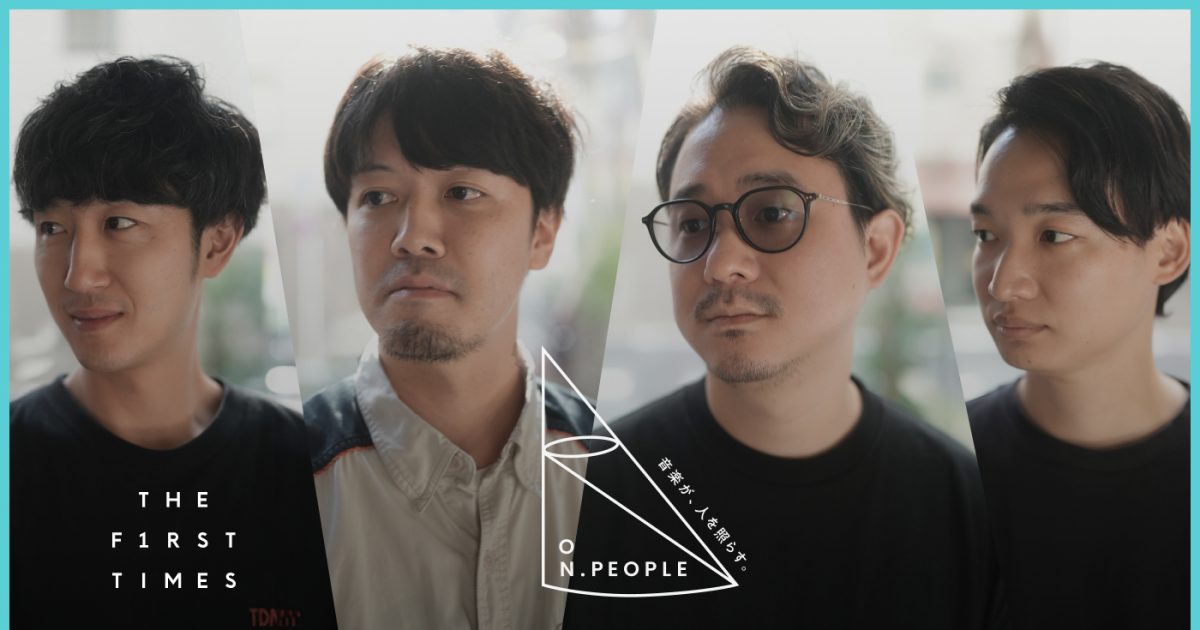
THE FIRST TIMES presents “ON.PEOPLE,” an interview content series where music shines. We spotlight the people supporting the music scene and unravel their untold stories through video and text. In this first installment, we feature “Echoes,” a new label under Sony Music Entertainment launched in September 2024. The announcement of participating creators including YOASOBI and MAISONdes has generated significant buzz. However, the full picture of the label remains unclear. How did Echoes come into being, and where is it headed? We spoke with four people involved in its founding: Yohei Yashiro (YOASOBI liaison), Hideyaki Yamamoto (YOASOBI liaison), Taichi Hirose (MAISONdes liaison), and Maki Hirabayashi (Publicity and PR liaison).
CONTENTS
- Echoes: What Is It?
- Building a Label with “Color”
- Not Working Backwards from Concept or Strategy
- Creating an Atmosphere Where “It’s Okay to Try”
- No Preconceptions About “Global”
- Ultimately, We Want to Create a “Shop”
What Is Echoes?
Echoes is a new management and label entity under Sony Music Entertainment. Echoes is home to YOASOBI—a unit consisting of composer Ayase and vocalist ikura, known as a “unit that turns novels into music”—as well as Ayase and Ikura as solo artists, MAISONdes (a music project conceived around “songs from the residents of each room in a six-tatami apartment somewhere”), Aooo (a rock band bringing together experienced next-generation musicians: Riko Ishino (ex.赤い公園), Surii, Hikaru Yamamoto, and Tsumiki), and more. Echoes also operates MECRE, a collaboration platform where people passionate about music and creation gather.
Building a Label with “Color”
Q: Thank you for being here. I’d like to ask about the new label, Echoes. To start, could each of you introduce yourselves?
Taichi Hirose: I’m Hirose, working as an A&R for the label, handling artists like Tatsuya Kitani and asmi, while also involved with the MAISONdes project. I also plan and operate MECRE, a creative platform.
Hideyaki Yamamoto: I’m Yamamoto, handling YOASOBI. I’m also involved with Ayase and Ikura’s solo activities.
Yohei Yashiro: Like Yamamoto, I also handle YOASOBI. I originally worked in new business development and helped launch “monogatary.com,” a novel posting site that became the catalyst for YOASOBI’s creation.
Maki Hirabayashi: I originally handled artist marketing and promotion, and currently work in business planning and development, including art business initiatives. I was also involved in launching “New Gallery,” the gallery space where we’re recording today.
Q: Thanks. So, what kind of label is Echoes?
Hirose: It’s a new label established within Sony Music as a framework for working with creators and artists across various genres, not limited to music. In addition to YOASOBI and MAISONdes, which team members here manage, it will also include platforms like MECRE. Since it’s a freshly launched project and each initiative is somewhat an extension of what we’ve been doing, we don’t yet have something we can describe as “We’re doing this new thing!” in clear terms. But I think various projects will start rolling out from here. It’s a brand-new team run primarily by staff in their thirties and younger.
Yashiro: While Sony Music has high name recognition as a company and label, I don’t think it has a particularly distinctive “color” as a corporate or label identity. With Echoes, we’d like to develop a clear identity within that larger structure. Ideally, artists and staff who resonate with that color would naturally gather.
Hirose: When individual efforts come together as one cohesive unit, it creates “clarity” when viewed from outside. The emergence of a “box” might make it easier for people to reach out to us or for talent to gravitate toward us. That’s something we’re conscious of.
Q: How did the decision come about to launch Echoes?
Yashiro: It wasn’t so much that we thought “Let’s start a new label!” from the beginning. Rather, we wanted to expand the various projects each of us had been challenging ourselves with on a broader scale. As we consulted with different people, we realized that Hirose and Hirabayashi were thinking along similar lines. Since we’re around the same generation and heading in similar directions, it made sense to do it together. That’s how it took shape.
Not Working Backwards from Concept or Strategy
Q: Tell us about the label’s concept.
Hirabayashi: I think it’s better not to lock down the concept too rigidly. Rather than fixing our axis too firmly, I’d prefer to let each of us do what we want first, then explore how the world responds to it as we go. If we overthink how we want to present ourselves, it starts to feel false.
Hirose: A label’s “color” can only emerge from its artists and products, I think. Take Ki/oon Music, for example. There was no such thing as a “Ki/oon Music-type artist,” and the music genres were all over the place, yet somehow that distinctive quality came through. That’s what we aspire to.
Yamamoto: When it comes to what kind of label we want to be, we’re mindful of the idea that “good teams attract good talent.” Especially now, Japanese music is gaining global attention, and lots of young talent is emerging. We want to be the kind of team those people want to join.
Hirose: Also, I’d like the staff members here to be in a position where they can clearly answer their respective artists: “Here’s why working with us makes sense.” The answer itself can be anything. These days, the barrier to making and releasing music has dropped significantly. In a world where someone might succeed making and releasing music solo, what’s the point of signing with a label? I’d like each staff member to have their own answer to that question.
Q: You mentioned “not locking down the concept too much,” but looking at the pitch materials we received beforehand, there’s definitely an edgy vibe—like lots of visuals of gashapon machines and energy drink vending machines that don’t seem directly related to the proposal. Whose taste or idea is that?
Yashiro: We all love gashapon, honestly.
Hirose: There was this thing where we said “Let’s put a gashapon machine in the office.” It’s partly because we find it fun ourselves, and partly because we want to show visitors and say, “Our office is cool, right?”
Q: Does that playfulness connect to Echoes’ overall aesthetic?
Yashiro: Maybe in terms of spirit. We often say things like “Let’s put a gashapon machine here” or “Let’s design a cooler paper bag instead of using the standard company one.” We think about those things frequently.
Yamamoto: From an outside perspective, it becomes easier for people to sense “What do these people value?” and decide whether they align with us or not.
Q: Do you have a specific target audience in mind?
Hirabayashi: Rather than targeting a specific demographic, the name itself—Echoes—suits us better as a metaphor: ripples spreading slowly and resonating with various people. We don’t know where in Japan or the world it will reach until we actually try.
Yashiro: It might be a different angle, but I’d find it interesting if we created connections with people in the same industry. You don’t usually know how your own company is perceived, and we don’t know much about other companies either—so there might be more opportunities to collaborate than we think. It would be great if Echoes could be a catalyst for that.
Creating an Atmosphere Where “It’s Okay to Try”
Q: You’re operating as a label within Sony Music, yet trying to move as freely as possible.
Yashiro: Exactly. Both when I launched the novel posting site as a new business venture and when I started YOASOBI, I’ve always been thinking about how to get people inside the company involved and how to get their support. That’s not unique to Echoes—that’s fundamentally what a company should do. We launched Echoes as a kind of experimental space, but really, I want to spread that experimental spirit throughout Sony Music as a whole.
Hirose: Beyond external audiences, internally I want to make it clearer that “you can actually take risks and try things at this company.” It’s an image thing.
Yashiro: Exactly. If people see what we’re doing and think “If they can do that, maybe I can try something different,” that would make us happy. And if new initiatives emerge from that, it ends up helping us too, since we’re all at the same company.
Q: By the way, whether from inside or outside the company, if someone sees Echoes and thinks “That looks interesting,” where should they contact?
Yashiro: Echoes’ SNS, for starters. DMs are probably open too.
Hirabayashi: As for us, you can reach out to any of us (laughs). Of course there are things we can and can’t do, but whether it’s a company or an individual, if there’s an interesting idea we can collaborate on, we’re game for it. …Though we probably should think about how to handle inquiries better.
No Preconceptions About “Global”
Q: The word “world” came up earlier—how are you thinking about global expansion?
Hirose: People often say things like “We’re committing to an overseas strategy,” but I think the word “overseas” is too vague. I don’t think segmenting by region makes much sense. My take is that “the best overseas strategy is not doing anything special for overseas.”
Yashiro: I feel that watching YOASOBI’s international shows. It’s not about aggressively breaking into overseas markets—it’s that we already have listeners all over the world, so we go where the fans are and play shows. Of course there are regional differences, which is interesting, and we’d love to play in various places going forward. But it’s not that calculated.
Yamamoto: Working with YOASOBI, I notice quite a few people listen to us as “Japanese music.” It seems like bundling together as a collective makes cultural penetration easier than promoting a single artist in isolation. In that sense, creating the Echoes entity has real value. Getting people across borders to listen to you isn’t that simple.
Q: Is there a region you’d single out as particularly interesting?
Hirose: It’s tricky to generalize. For example, Southeast Asia is often touted as attractive—growing population, lots of screen time. But I wonder if we should think about it so casually. Even if events draw decent crowds, that’s just demand for spectacle. People understanding an artist’s background and becoming genuine fans—that kind of fan-business mentality hasn’t taken root as deeply there yet. We need to understand those regional conditions one by one and figure out how to help our culture be accepted there.
Yashiro: I think targeting and tailoring things for specific regions or demographics is actually massively inefficient in the big picture. The ideal is to make what we think is good, then serve the people who embrace it. Not the other way around.
Q: Hearing all this, it seems like the common theme across Echoes is not holding too many preconceptions or strategies, but genuinely spreading what you find fun and interesting.
Yamamoto: That’s honestly all we’re good at. “Adapting” is actually harder—it ends up feeling forced and inauthentic.
Ultimately, We Want to Create a “Shop”
Q: Finally, what do you want to do in the near term, and what’s your long-term vision?
Hirabayashi: Since I handle publicity and communication, I’d like to create various “gears” that mesh well between artists, creators, and audiences. That might be a book, or an audition, or something else—I’m not sure yet. This kind of space allows for experimentation, so I want to enjoy the process.
Hirose: I seriously want to get a huge sign made for the office ASAP. I think “putting up a sign”—physically and spiritually—is crucial when things start. I want to create a sign that makes people from other departments or companies look at it and go “What the heck is this?!”
Yamamoto: Mine’s a bit abstract, but throughout history there have been labels that artists aspired to join. How do we create that kind of place in a form that fits today’s era? That’s something I want to keep thinking about.
Yashiro: I want to run a bookstore. If we did it with Echoes, it’d be cool to fill it with books and items that convey Echoes’ philosophy and atmosphere. I think each of us probably has a different “shop” we’d like to run.
Hirose: On that note, I want to open a snack bar.
Yamamoto: Me, I’d want a clothing select shop—the kind with a café attached.
Hirabayashi: In a way, I’m already involved with one through “New Gallery” (laughs).
Yashiro: That said, there’s also the flip side: I want to turn Echoes into a proper company. A music company should fundamentally create business with artists and creators, generate real profit, and make sure that profit gets returned to everyone involved—a genuinely happy process. But realistically, the industry has problems like exploitation and labor issues, which make people hesitant to have a positive image of “companies.” That can keep new-generation talented staff and creators from wanting to join. I think that’s a problem we absolutely have to solve moving forward. With Echoes, even though we’re small, I want to build a model case as we take on that challenge. That’s our long-term goal.
INTERVIEW & TEXT BY Tomoya Matsumoto
Echoes Official Site: https://echoes-label.com Echoes YouTube: https://www.youtube.com/@echoes-label Echoes Instagram: https://www.instagram.com/echoes_label Echoes X: https://x.com/echoes_label