
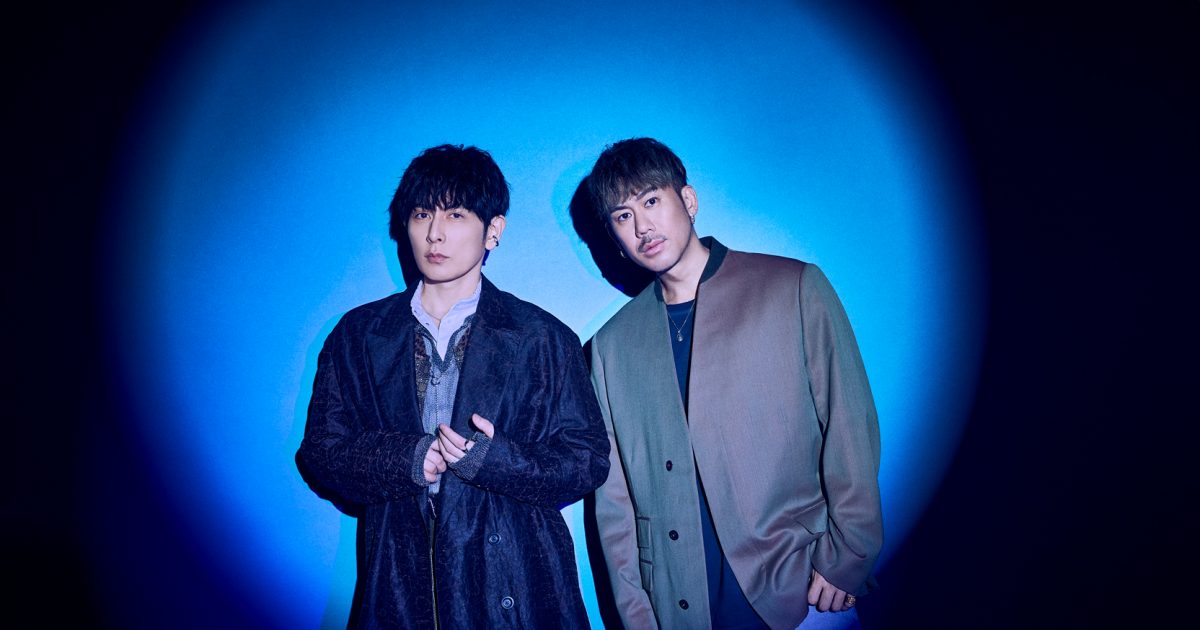
CHEMISTRY: Two Members Discuss "BLUE" and the Creation of Their Latest Work as They Step Into Their 24th Year
This interview was originally published in Japanese on thefirsttimes.jp. Translated by VK Chronicle.
CHEMISTRY Interview
CHEMISTRY has released the mini album BLUE CHEMISTRY and is currently on their nationwide hall tour BEGINS — their first in two years. The CD comes just one year after their previous release “Sparrows” and contains six tracks total: two new songs, two covers, and two self-covers from their THE FIRST TAKE appearance. As the band steps into their 24th year, having reached their 23rd debut anniversary on March 7th (Thursday), what does the descriptor “BLUE” attached to CHEMISTRY represent?
Contents
Q: Tell us about your impressions from the nationwide tour that’s currently underway.
Kawahata Kaname (Kawahata): Yeah, it’s really heating up! For us, it’s been a while since we’ve done a hall tour of this scale — 15 shows across 13 locations nationwide — so we’re really enjoying it! The band members have changed and we’re doing a new-style approach, and that groove just keeps getting better with each show. It’s a good vibe.
Dotchin Yoshikuni (Dotchin): Yeah. Since we’re in such a good mood doing the tour, that energy transfers to the audience too, and they’re in a good mood as well. Also, after the live ends, we take photos with the band members and post them on SNS, and I think, “Wait, there were only this many people?” The thickness of each individual’s sound is really significant. I’m amazed we’re producing that much sound with this lineup, especially lately.
Kawahata: There’s no guitarist, right.
Dotchin: Right. Bass, drums, keyboards, and saxophone. We’re doing pretty well with just that.
Kawahata: This lineup is becoming more common. Basically it’s drums, bass, and saxophone as the core. This time we added keyboards on top of that. We do play some sequences, but right now this setup feels right.
Q: The mini album also centers on small ensemble arrangements, and the two new songs “Play The Game” and “No More” were added to the setlist starting with the March 7th debut anniversary performance. How did the songwriting process start?
Dotchin: We decided on the mini album contents first. New songs, covers, and THE FIRST TAKE. We discussed the overall balance of those three elements at the start.
Kawahata: The two THE FIRST TAKE tracks are bonus tracks, so we started with how to approach the two main new songs and two covers. First, we decided on the concept of BLUE CHEMISTRY.
Q: How would you describe that concept?
Dotchin: I think it’s good to imagine things that “BLUE” brings to mind. In terms of music, it could be jazzy things, shadows, melancholy, blueness… I hope everyone feels their own interpretation.
Q: So it doesn’t have just one meaning.
Kawahata: Right.
Q: “Play The Game” has the lyric “Always searching for a thrill that can’t be put into words,” so I felt an adult sense of youth in it. And it’s become the theme song for **J SPORTS STADIUM 2024 Baseball Broadcast.**
Dotchin: At the demo stage, we decided to co-write with three people. We each threw out keywords first, and Matsuo (Kiyoshi) compiled them.
Q: What feelings did you each put into it?
Kawahata: I’m not that knowledgeable about baseball, but I work out regularly. So I wanted to write from the perspective of what I’d think if I were an athlete — not just baseball players. When I’m working out, I feel anxious sometimes. There are good parts and bad parts. Just doing workouts is genuinely pretty harsh. What matters is what you’re doing it for. I realized you’re doing it to move forward to the next thing, so I just poured that out. I wanted to highlight the behind-the-scenes that you don’t see when players are actually playing — the feelings heading into a game. I wrote it right after I finished training.
Q: Why do you think you’re able to keep training?
Kawahata: For me, the stage is where I play, so in that sense it’s exactly the same as baseball players. It’s a battle of physical strength. When I sing — I’m putting sound to words coming out of my mouth — I have to use my entire body as a speaker and push it to the maximum. If my stamina runs out and I can’t convey myself with my whole body, there’s nothing I can do. Maybe I keep working out precisely because I do music.
Q: So there’s a similarity between being a vocalist and being an athlete.
Kawahata: I think there is. When I’m into it, I train four to five times a week. If I don’t do it, I feel off, and not doing it makes me anxious.
Q: What feelings did you contribute, Dotchin?
Dotchin: First, I thought about what emotional state the song’s main character was in. My first impression hearing the song was that it was bright, so if I just put bright words on top of it, it would feel shallow. So, in order to give it narrative depth, I wrote from the honest perspective of what’s in the shadows, the unseen side. If they picked up on that, I felt I could sing it too. Also, since it’ll be broadcast on the baseball broadcast and I love baseball, I wanted baseball players to hear it.
Q: It’ll probably play at the stadium during pre-game practice, right?
Kawahata: Yeah, hopefully it will.
Dotchin: If our song happens to be playing as background music while they’re doing batting practice, I hope not just that it’s a refreshing song, but that the meaning of the words really resonates with them.
Q: When Matsuo’s version came back, what did you think?
Dotchin: The lyric that stuck with me was “Expectations I’ve carried since birth.” Some people love baseball, get support from their parents, and work toward becoming professional. There are all kinds of situations. The draft period has so much drama. Some people want to make it professional to earn money and make life easier for parents who sacrificed for them. There are all these different circumstances, but I was writing hoping the lyrics would apply broadly to everyone, so I felt they’d distilled what we were both thinking into concise words.
Kawahata: Yeah. It really stuck with us. “The loneliness that haunts the path to glory” — that’s exactly what I was thinking. I wanted to sing about that invisible effort, so I thought Matsuo really came through.
Q: There’s the phrase “I want to chase my dreams.” For you two, who’ve been together 23 years since debuting, how do you feel about the word “dreams”? I’d like to hear about dreams after your dreams have come true, or dreams in your adult life now.
Dotchin: I have plenty of simple dreams. Personally, I don’t think there’s any shame in going full circle and singing about dreams again. I think having simple dreams makes you genuinely happy. For example, I have dreams like “I want to learn to do this” or “I want to be able to draw.” I think constantly searching for dreams that excite me is really important in life.
Kawahata: I have dreams too, plenty of them. I think there are still tons I haven’t fulfilled. A dream is basically a goal, right? When we debuted, I learned that you won’t achieve anything without taking action. Getting my large motorcycle license when I was 40 — that was all a dream of mine. I want to live somewhere warm, I want to live overseas — figuring out what I need to do for that, those are goals and dreams. Having them is absolutely better than not having them as a person. We don’t know how long we’ll live, but basically I’m always thinking, “What do I need for my dreams and goals?”
Q: How was the recording for “Play The Game”?
Kawahata: It was fun to sing. They picked up on the keywords we threw out, so I could sing really comfortably and talk myself through it. Lines like “Hold your head high” and “Time has already started running” — I had plenty of parts where I could really reinforce those messages to myself.
Dotchin: …I can’t really remember it, honestly.
Kawahata: He doesn’t remember much (laughs).
Dotchin: I think it wrapped pretty quickly.
Q: (laughs) How was the MV shoot?
Dotchin: We borrowed a baseball stadium for the shoot. It was a nice facility. The people there said, “Use it anytime.” But it was cold.
Kawahata: Really cold. There were lip-sync scenes we shot in the studio, and scenes shot at the stadium with a drone at sunset. And in the night scenes, there are baseball players, but we discussed how much screen time they should get. Initially there was more.
Dotchin: But it felt a bit too baseball-focused.
Kawahata: But since it’ll air for a year on the baseball broadcast, we wanted to make sure the baseball imagery was clear. We discussed that balance while filming.
Dotchin: The actual camera time went by incredibly fast. Though the staff worked from morning to night, so it must have been tough for them. The baseball players were interesting — the pitcher is a former high school baseball player who’s also an actor, and the catcher is a professional catcher from an independent league. Getting to play catch with both of them was really fun.
Q: Dotchin, you’ve thrown out the first pitch before, haven’t you?
Dotchin: I’ve sung the national anthem three times, but CHEMISTRY hasn’t done a first pitch yet.
Kawahata: Not yet. We should do a first pitch.
Q: I’m looking forward to a first pitch or national anthem performance this season, especially with this song.
Dotchin: My pitching arm’s getting weaker, so if we do get the chance, I’d want to “Play The Game” sooner rather than later (laughs).
Q: What was the theme for the other new song?
Dotchin: We left that one to Matsuo, but the recording session was the day after we shot the “Play The Game” MV.
Kawahata: That’s right! I was practicing during breaks.
Dotchin: During recording, the conversation with Matsuo shifted a bit to the Isley Brothers. He mentioned whether we should add some Isley-ish electric guitar to the arrangement. So I tried singing a phrase in the verses that sounds like something the Isley Brothers would do. I think he also wrote it imagining us two singing a breakup song. We focused on understanding that world quickly and how we could both approach the song together.
Kawahata: It’s completely different from “Play The Game” — it’s a slow R&B number. I heard the word “Isley” mentioned, and I could see how Matsuo picked up on that vibe, but I didn’t feel it was pure R&B. While singing, I realized it’s more R&B-flavored J-POP, and I think that’s more like us. It’s something Matsuo’s been telling us since our debut days, so as we sang this style, it started to click more and more.
Q: What would you say the “world” of this song is?
Kawahata: The main character in this song has definitely fallen hard. Even knowing the other person doesn’t love them anymore, they can’t leave. That kind of bittersweet, feminine side of a man — that’s R&B-like, in a way. But it’s not just that. I wanted to deliver the expansive feeling of the chorus, that impulse to move forward, with good vibes.
Dotchin: The lyric I’ve grown to love most — the part I sing — is “Mismatched is fine, irregular is fine, as long as I’m with you.” It’s from the perspective of someone who’s been hurt. But in romance, I don’t think you can just say the other person is entirely wrong. Maybe there was something wrong with me too. I don’t know.
Q: But “you” probably cheated the whole time. And “I” only realized it while unable to leave, but finally broke it off myself.
Dotchin: (laughs) So this guy’s a real jerk.
Kawahata: But then the other person cries first (laughs).
Q: This is definitely CHEMISTRY — a truly masculine breakup song.
Kawahata: We’re happy people say that about it.
Q: How was the vocal recording?
Kawahata: It came together pretty smoothly.
Dotchin: We nailed it right away!
Q: (laughs) You also cover two songs with jazzy arrangements that really fit the “BLUE CHEMISTRY” concept. There’s a mature, sophisticated feel to it.
Kawahata: Right. It’s got an adult, jazzy vibe, and I think because of where we are in life now, we can sing these songs in a way that carries our experience, adding depth. We all suggested songs, and we picked a famous Matsuda Seiko song that everyone knows, and Yoshikuni chose the other one.
Dotchin: We’ve been doing that one live for a while. It’s live-exclusive first, actually. We did it on the fanclub tour.
Kawahata: Yeah, we settled on it and started doing it.
Q: Why did you choose Ando Hideki’s “Sayonara Itoshi no Baby Blues”?
Dotchin: I actually knew it already and loved it. When I’m thinking about setlists for my solo lives, it’s always been among the possibilities. But one time when I rehearsed it solo, it didn’t quite fit. I thought, “Hmm, that’s not what I calculated. This might be more interesting with two voices.” Since Ando Hideki’s cover came from a tradition with Suzuki Masayoshi, genealogically speaking, we’d fit right in. And really, it comes down to the power of the song itself. It’s a song where my heart genuinely says, “Yeah, this is good” — where my fist goes up. I wanted to convey that gut feeling to Kaname clearly, and I thought doing it as a duo would be a successful approach. Recording a song you’ve never done before is fine, but honestly, it’s better to be practiced from live shows. So we did it at the fanclub tour first.
Q: I thought you chose it because Ando is the “Downtown Hero” of Adachi Ward, and you’re from nearby Katsushika.
Kawahata: Huh? Is that so!? For real? So he’s from Adachi. I actually heard it at a Marty Martin live. I love this style too, so I definitely thought it was amazing.
Q: The arrangement has a jazz piano trio with trumpet.
Dotchin: Actually, it’s flugelhorn. The player is Matsui Hidetaro, and he’s an interesting guy. I didn’t know of him, but I heard he’s a young player with incredible momentum. And our drummer is Hatae Takeshi — a senior who toured with us before.
Q: “SWEET MEMORIES” has soprano saxophonist Nakazono Ami, but how did you approach covering a female artist?
Kawahata: When we decided to do covers, we talked with our team staff early on, and Matsuda Seiko came up pretty quickly. We’ve sung songs from a female perspective before, so we’re not resistant to covering women’s songs. We’ve always wanted to eventually sing something by Matsuda Seiko, who everyone knows. She’s an idol, but she has incredibly high vocal ability, and that’s what people still say about her. I genuinely think that’s amazing. As a vocalist myself, I thought tackling a Matsuda Seiko song was a good move, so doing it as a duo now felt right.
Dotchin: Even though it’s jazz, when I sing it, it becomes poppier. I think that’s our characteristic, so maybe this is the typical example. That’s probably good.
Q: “No More,” “Sayonara Itoshi no Baby Blues,” and “SWEET MEMORIES” are all adult love ballads. Is CHEMISTRY going to keep singing adult love songs?
Dotchin: Who knows? We’re not going to get all lovey-dovey, right? Not like “I’m the king of love songs” or anything like that.
Kawahata: Right, not exactly. But doing a jazzy arrangement concept like this and singing love songs over and over is one approach. And we don’t hate love songs at all. So yeah, it’s a possibility.
**Q: Including the two songs you did in one take on THE FIRST TAKE, this mini album has six tracks total, and “You Go Your Way” is also a breakup song. The Skoop On Somebody-provided “My Gift to You,” which channels that R&B predecessor spirit, has the lyric “Growing