
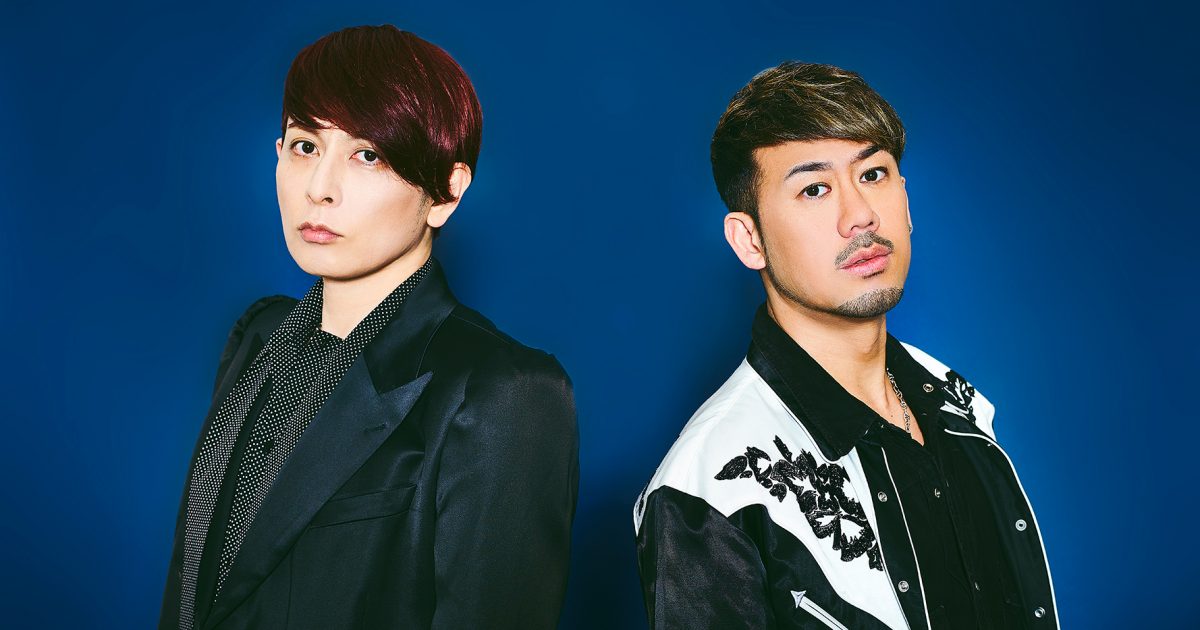
CHEMISTRY Collaborates with Da-iCE (Daio Yudai, Hanamura Sota) Across Generations: Four Stories Born from Four Voices
This interview was originally published in Japanese on thefirsttimes.jp. Translated by VK Chronicle.
CHEMISTRY × Da-iCE Collaboration Interview
CHEMISTRY, who wrapped up their 20th anniversary year with a performance at Budokan last February and continue their energetic live activities, have released “Sparrows” (スパロウズ) — their 39th single overall and their first in three and a half years, following their remake project with origami PRODUCTIONS and a best-of collection. The title track, with lyrics and total production by Kiyoshi Matsuo and composition by Yoshihiro Toyoshima (who handled “You Go Your Way”), features a collaboration with Da-iCE’s twin vocalists Yudai Ohno and Sota Hanamura—members of the five-piece group that won the Japan Record Awards Grand Prize for the first time. We spoke in detail about how this intergenerational collaboration between the two acts came about, following their prior exchanges through musical theater appearances and solo collaborations.
The Distance Felt Much Closer Through Our Collaboration Live
Q: Can you tell us how the collaboration with Da-iCE came about?
Kawahatake Yo: I once shared a stage with Da-iCE during my solo activities, and I’ve even gone out drinking with them. That’s how I got close with Yudai, and he invited me to participate in his solo work. Dokchin has also performed on stage with Sota. We’ve had exchanges across the board. I’ve known for a long time that they respect us. But I think the biggest thing was when they invited us for a collaborative live performance. We’re not really the type to do collaborative shows, but Da-iCE reached out and asked us—I absolutely wanted to do it. That’s when I really felt the distance between us getting much closer, and that led to this collaboration.
Q: Would you mind going through the collaboration timeline step by step?
First, in April 2019, Yudai Ohno released his solo album This Road Ahead, which included the track “Changin’” featuring you as a guest vocalist.
Kawahatake: That was the beginning, yeah. Yudai reached out to me. He knew I was a fan of CHEMISTRY, and he actually said so. The songwriter was Hisahisa Taniguchi, who’s worked on CHEMISTRY tracks like “Wings of Words” and “Miracle in the Sky,” so it naturally developed from there—they really wanted us to sing together. I’ve sung with various artists during my solo work, but I felt Yudai’s respect particularly strongly. I recorded my part first, and later Yudai told me, “Hearing your voice come through my headphones was so wonderful.” I was genuinely glad we did it.
Q: Then in 2020, you performed together with Dokchin and Sota in the Broadway musical “RENT.”
Dokchin Yoshikuni: I knew the group existed, but I didn’t know the details until we actually worked together on stage. However, since Mark and Roger have such a deeply connected friendship, I felt like we needed to communicate more and more. We started with things like “You have an anime voice,” “Yeah, people say that all the time,” but as rehearsals went on and we talked about various things, including our worries, I realized he’s actually a very serious person. He wasn’t the type to linger at after-parties and chat casually. When work ended, he’d give a polite greeting and head home. I really sensed his professionalism.
Q: I remember seeing you two on a TV music program at the time, talking about how great Da-iCE is.
Dokchin: Sota has such a presence. It’s not just about his well-known high tone—it’s his texture. When he sings, his face just comes to mind. Yudai, on the other hand, has this encompassing warmth to him. There’s a soulful flavor to his roots, which is nice. I thought that if the four of us sang together, it could be really interesting.
Q: And then Da-iCE’s national hall collaboration tour “Da-iCE TWO MAN LIVE TOUR 2022 -REVERSi-“ took place on May 1st, 2022 in Niigata.
Kawahatake: We performed first, then I watched Da-iCE’s live from the wings the whole time. They were really complimentary about us in their MC too. I don’t know if they meant it or if someone told them to say it (laughs), but they said “We respect you.” It was touching to hear them express something that would be hard to say otherwise, and it hits differently when you’re watching from the wings. It really made me grateful that what we’ve done has reached this younger generation.
Dokchin: Sota has this really cute side to him. He suddenly thrust his palm out in front of me and said, “I get nervous when I talk, look—” showing me his sweaty palm (laughs). I’m like, “That’s cute, dude” (laughs). He seemed really busy, and I could tell scheduling was incredibly demanding. But watching him dance, he was so pure and energetic. I just kept watching from the wings.
Q: Then in June 2022, you made a guest appearance on Da-iCE’s regular TV program, and your first collaborative performance happened.
Kawahatake: We sang “PIECES OF A DREAM” as four. Since we didn’t sing together during the collaboration live, that was the first time.
Dokchin: Yudai sang in his own style, so I kind of matched that, and he smiled. It was a moment where we could have a musical conversation like that.
Kawahatake: I could really feel how much he wanted to sing this one song together, and that made me happy. I made eye contact with Sota, but not really with Yudai. I was wondering what was up with him (laughs).
It Felt Like a “Cover Song” — Something That Fits This Era, and Part of the Fun
Q: (laughs) You must have been really nervous, singing a song with your idol that you’ve always listened to.
During the Zepp Tour 2022 Get Together Again!! that year, you also covered Da-iCE’s “CITRUS.”
Kawahatake: Actually, this collaboration project was already in motion around that time. There was a hint of teasing involved, but also respect. It’s pretty interesting, right? It felt kind of like a “cover song”—the kind you’d find online. I thought it fit this era perfectly. It was part of the fun and playfulness of it all.
Dokchin: But that song has a high key—it was tough. I’d watched them perform it on TV many times and thought, “Wow, that looks hard,” but I never imagined we’d actually sing it at a live show too.
Q: Jumping ahead a bit, there was also buzz around the NHK program “SONGS” on February 9th, 2023, where you premiered “Sparrows” on television.
Kawahatake: That program itself got a huge response. Looking back over the 20-some years since we debuted wasn’t something we did very often. We got to perform everything from our signature songs to the latest Da-iCE collaboration. People said things like “That brought back memories” and “That was a great show.”
Dokchin: We were really grateful that they put together a special feature for us, and we got to perform four CHEMISTRY songs in addition to “Sparrows” with Da-iCE. We received a lot of feedback saying “That was great.”
Q: How does CHEMISTRY see Da-iCE as a group?
Kawahatake: They’re a current group. A contemporary group, so to speak. It’s not quite like calling them our younger brothers.
Q: For example, who would be CHEMISTRY’s equivalent for Da-iCE?
Kawahatake: Someone like Toshiaki Kubota.
Dokchin: When I sang Da-iCE’s “CITRUS” at a live show, Skoop On Somebody came to mind. Their seventh single “My Gift To You” was provided to us by Skoop, and then they did a self-cover of it themselves.
Kawahatake: Skoop was 1997, we were 2001, and Da-iCE got their major debut in 2014. It took surprisingly long before “CITRUS” came around. But I knew they were active with anime theme songs like “DREAMIN’ ON” from One Piece (Da-iCE’s 18th single, released August 2020). It’s not about hierarchy or anything—it just makes me happy to see them like that, and I’m excited about what comes next.
Q: How did the production process for the Da-iCE collaboration track go?
Kawahatake: We had Kiyoshi Matsuo come in as producer. Since Da-iCE loves CHEMISTRY’s early work, we thought something like “You Go Your Way” from our catalog would be good. We started production from there, and checked in several times from the demo stage onward. It changed quite a bit from the first demo. We consulted with them and shared our opinions as we went along.
Dokchin: Yoshihiro Toyoshima, who worked on “You Go Your Way,” wrote us a medium ballad. During recording, he said “This is a really great song,” so I think Matsuo was happy too.
Dokchin: I actually asked Matsuo directly on set: “Please write a song for Da-iCE too.”
Q: (laughs) You just ask right there on the spot?
That’s impressive. Did you talk to Matsuo about anything?
Kawahatake: It’s like a continuation or sequel to “You Go Your Way,” right? The taste and world are completely different though, and it really conveys that feeling of living happily in the present moment. In that sense, this is a standalone track, but “You Go Your Way” came after we talked about our experiences. Personally, it brings back memories—it’s very vivid. I sometimes wonder what the people we met back then are doing now. So in some ways it’s realistic, but singing with four people creates four different stories, doesn’t it? Everyone interprets it differently, from different angles. I really wanted people to hear how these four voices come together.
Q: Hearing you say that, the lyrics “The future we envisioned back then” and “Still living today as a continuation of that time” hit even deeper.
Dokchin: Well, for us, since we’re CHEMISTRY and we’ve restarted, it’s literally a continuation. As I listened to what Matsuo was saying, the word “sparrow”—it means a small bird that’s the weakest in the bird world compared to crows, kites, and eagles. He was putting human life in the image of a small sparrow earnestly facing forward despite its weakness. Thinking back on the past—if any small moment, encounter, or timing had shifted even slightly, our futures might have been different. But now we’re savoring the path we’ve walked and the people we’ve met, and moving forward with a positive outlook. I think the shared resonance comes from this image of a nameless, weak creature taking flight into the sky with a positive attitude.
The Presence of Da-iCE’s Two Vocalists Added New Color
Q: What was the recording experience like? How did it feel to layer four voices instead of two?
Kawahatake: Since I recorded first, there were no other voices yet. I had to be the foundation, so I thought really carefully about it. But I had everyone’s voices in my head, and I imagined each of their sounds as I sang. The world definitely expands. Even when we capture the same point, there are differences, right? The way Dokchin was just describing it—I want to hear how Yudai and Sota are thinking. When I listen to the finished track, it switches between different textures, and the vocal colors have variety. I think that’s great.
Dokchin: I felt that Sota and Yudai have a similar relationship as vocalists to what we have. If it had just been the two of them, they probably would’ve sung fine, but I feel like Da-iCE’s presence added new color to the track.
Q: The music video has also been released.
Dokchin: It starts in this kind of sterile space with four microphones hanging from the ceiling, and we’re arranged in a circle facing outward while singing. Then there are scenes where spotlight lights hit the walls and we’re all getting along together. Basically, it’s about conveying the song.
Kawahatake: Yeah. It focuses on the four vocalists rather than telling a narrative.
Dokchin: I think each person’s humanity comes through in the visuals, so I hope people enjoy that aspect. It’s not a story-driven thing. I’d like them to enjoy the four of us simply laying our hearts into the song’s lyrics without unnecessary embellishment—that unadorned presence.
Q: Anything happen behind the scenes during shooting?
Kawahatake: No incidents, but we really kept things moving. (Time went by quickly.)
Dokchin: That is an incident!
Kawahatake: Haha. We were really focused on how efficiently we could shoot. We chatted in a friendly way while keeping it smooth. There wasn’t anything complicated with composites or anything like that. We just shot straightforwardly.
Kawahatake: We couldn’t get it under three hours, which bummed me out, but we wrapped in about two hours and fifty minutes. That’s pretty amazing. This is Sparrows!
What Makes Us Happiest Is When Both Da-iCE’s Fans and CHEMISTRY’s Fans Are Happy
Q: (laughs) After wrapping up this intergenerational collaboration, what are your thoughts?
Kawahatake: On “SONGS,” they called us “Chemi-love,” and I think there are probably people in all kinds of different genres who have that “Chemi-love.” This collaboration made me see new possibilities going forward. Of course, I still want to put out new songs as a duo, but I think it’s also important to do things that excite us too. If this kind of thing continues, it could be really interesting.
Dokchin: I wonder if this really transcends generations, honestly. Sure, age-wise we’re from different eras, but we got to work with people who’ve been listening to CHEMISTRY’s music—in that sense, I don’t really feel the passage of time. That’s exactly why all four of us sang as equals without anyone pushing to the front. What makes me happiest is knowing that both Da-iCE’s fans and CHEMISTRY’s fans are happy hearing this song.
Q: You mentioned wanting to release new songs as a duo—the single’s B-side includes a new track called “akatsuki.”
Kawahatake: When we talked about what kind of song we wanted to make, the word “city pop” came up. We’ve covered Mariya Takeuchi’s “Plastic Love” at live shows, and I personally love that style too. We haven’t really done that aesthetic as a duo, and there’s an image of current artists in their late twenties and thirties doing it. Time’s come full circle, and we thought—what if we did something that’s elegant but also enka-like? Turns out when we sang it as two people, it became CHEMISTRY. Even with pop music as the sound, it becomes unmistakably us. It made me reaffirm that, and I think it became a track we can really enjoy at live shows too.
Dokchin: There’s clean guitar and city pop essence to it, but there’s a beat, and it has this sound where you can almost see a mirror ball. It has groove to it, and it’s become the kind of song that gets people excited at live shows.
Q: How did you interpret Matsuo’s lyrics?
Kawahatake: It’s not as narrative-driven as “Sparrows.” It’s more about a single day in everyday life. I didn’t overthink it too much—I just enjoyed singing it.
Dokchin: That final line, “The beginning of a love mythology”—it’s kind of a cheesy phrase in a way, but that’s part of the song’s character. As I was unpacking that, I asked Matsuo, “This is about the state of the world right now, isn’t it?” and he said, “Good catch.” So basically… it became a pretty love-and-peace kind of song.
We Want to Protect CHEMISTRY’s Core While Breaking Things Down and Trying New Things
Q: You’re releasing your 39th single, and the day before comes with the milestone of your 22nd anniversary, as you enter your 23rd year.
Kawahatake: I don’t know what’s ahead, but I want to keep doing live shows consistently. I want to expand possibilities based on this kind of opportunity. I think doing things one step at a time like this helps us see what comes next. For example, it doesn’t have to be just music