
Sid's New Album and "Reiwa Enka": Exploring the Relationship Between Sid and Enka Music
This interview was originally published in Japanese on thefirsttimes.jp. Translated by VK Chronicle.
sid – “Reiwa Kayōkyoku” and the Stories of Love
The four-piece rock band sid is releasing their original album 『海辺』 for the first time in approximately two and a half years. Crafted with “Reiwa Kayōkyoku” as their catchphrase, the album features songs penned by vocalist Mao—ten tales of love. You can enjoy sid in both old and new ways through this work. Here, we focus on the relationship between sid and kayōkyoku (Japanese popular song), exploring what “Reiwa Kayōkyoku” means in this new release, speaking with all four members about why they’ve rooted their music in kayōkyoku since their formation.
| INTERVIEW & TEXT BY Yoshie Tojo | PHOTO BY Hideaki Imamoto |
The World of the Songs Draws from Reiwa Kayōkyoku; the World of the Poetry is Love Stories
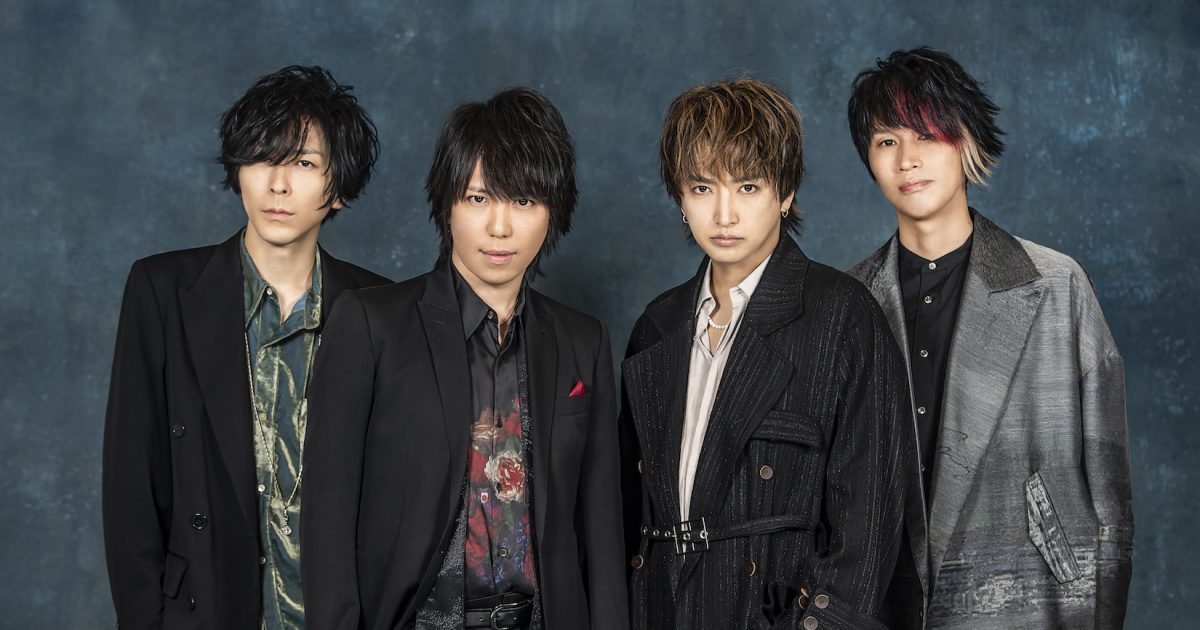
Q: First, about the photographs used on the CD jacket and sleeve. Usually, sid’s group shots are always carefully composed, right? But in this work, under a somber, overcast sky, the four of you are standing with different positions and gazes. That felt fresh and poetic to me.
Shinji (Gu): Since the title is 『海辺』, we shot with Chiba’s coastline in the background. I don’t think we’ve done anything like this before.
Q: I hear this work was inspired by two themes: “Reiwa Kayōkyoku” and “ten tales of love.” Which idea came first?
Mao (Vo): I think they came around the same time. To put it simply—the world of the songs is inspired by Reiwa Kayōkyoku, while the world of the poetry is love stories.
Q: I see. I’d like to revisit the relationship between sid and kayōkyoku. From your indie days, sid has wielded melancholic kayōkyoku as one of your weapons. And before performing such songs, Mao still says “next is sid,” announcing the title like an old kayōkyoku recital, then begins playing. But fundamentally, why did sid—a rock band—decide to pursue a kayōkyoku sound?
Akki (Ba): Mao and I have memories of discussing this. When we first talked about sid’s direction as a duo, we decided we wanted to do something rare rather than something commonplace. Looking around at the time, there weren’t really people doing proper kayōkyoku, so we took the challenge and started doing songs like “青” and “私は雨” and “循環.” Then, with all four of us, it became even more concentrated—we did things like “妄想日記,” which felt more refined.
Q: Everyone, where does your original experience with kayōkyoku come from?
Akki: In my case, the roots of kayōkyoku come from my mother listening to Akina Nakamori and Kyonkyon (Kyōko Koizumi), early CHAGE and ASKA…
Yuuya (Dr): I watched 『THE夜もヒッパレ』 constantly. Through that show, I discovered Showa-era kayōkyoku artists like Akira Fuse, Miki Asakura, and Goro Noguchi. After that, through various music programs, my kayōkyoku foundations became Yosui Inoue and Anzenchitai.
Shinji: My encounter with kayōkyoku—my mother only listened to enka like Ayako Fuji. The only kayōkyoku in that mix was Tatsuro Sugi. My mother was a huge Sugi fan, so I often went to karaoke practice with her and heard the songs there. After my mother sang, I’d sing X JAPAN (laughs). The kayōkyoku that became my foundation is Rebecca, which I genuinely liked.
Mao: My home always had the TV on, and there used to be a lot of music programs back then. In my case, kayōkyoku naturally entered my ears from there. Also, because of where I’m from—Kurume and Fukuoka have produced wonderful musicians. Especially during the Showa kayōkyoku era, there were many. So I still love The Checkers. I think they’re the perfect example of kayōkyoku. Nowadays people do everything themselves, but back then, professionals called “masters” would write the songs, and young people would sing them. The Checkers and Seiko Matsuda—they laid the foundation for what’s called kayōkyoku.
Shinji (Gu): That’s true. So, what was the biggest catalyst for you all to create an album with the catchphrase “Reiwa Kayōkyoku”?
Mao: Part of it came from within us, but this time our record label also discussed how to move forward as sid approached our important 20th anniversary. And “Reiwa Kayōkyoku” just popped out as one of the ideas. All four of us said “that’s great!” and went in that direction.
In This Era, “Love” Is the Theme That Resonates Naturally
Q: So the idea to make all songs love stories came from where?
Mao: I originally wanted to try writing an entire album with a single concept. So when I thought about what the theme should be if we did it now—thinking about our fans, the members, and myself—I felt like “love” would be the theme that naturally resonates in this era. With COVID, all of us, including our fans, experienced something we’d never lived through before: being forced apart. I didn’t want to leave it at “that was painful” or “we couldn’t move.” I wanted to express what we felt during COVID, so I decided love was the theme.
Q: Was the process of creating love stories enjoyable?
Mao: I shut myself in my room and wrote continuously for a while, which was really fun. I’ve always liked writing, but over the past five years, I’ve had exponentially more opportunities to write in different places and read things others have written. So writing and communicating with someone has become more enjoyable than before. “Are you doing what you love?” has been a common topic lately, and while writing these, I thought “I’m doing work I really love.”
Q: Though these love stories have their quirks. Listeners’ imaginations are provoked by what’s not in the lyrics—”what is this pair’s relationship?” That kind of style is very much Mao-like. How do you write lyrics like that?
Mao: I used to imagine things in my head, then struggle to put them into words when I started writing. But recently my precision has improved, and things I think of become words more quickly. So right now, I’m just writing down my fantasies.
Q: But putting those fantasies into a short story—no, into a story constrained by melody—doesn’t that feel difficult?
Mao: That’s something I’ve always done, so in a way it’s second nature. But with the fantasy part, since I’ve written so much, my own drawers feel empty. In my case, I’m doing many times that amount of input every day, so my doors keep multiplying—I’m in a state where it’s just endlessly fun.
Q: Understood. So how did the production of this work progress?
Yuuya: Since we had a solid concept this time, we gathered everyone before starting and thought things through properly—something we hadn’t done in a while. We also took our time with production. Recording started around mid-June last year, so we’d finished the songs before that. So we really took time to create everything carefully.
Our “Strength”
Q: After finishing, what did you feel about the Reiwa Kayōkyoku that sid creates?
Yuuya: I think it’s our “strength.” The kayōkyoku part. Because we’ve been doing it since the beginning. This time isn’t about returning to something—
Q: Right, you’re not just doing old kayōkyoku.
Yuuya: Exactly. We’re updating it. That’s why we used the word “Reiwa Kayōkyoku,” which hasn’t been used anywhere yet. So if someone asks “what is Reiwa Kayōkyoku?”—it’s this. This work we’re releasing is a new genre: Reiwa Kayōkyoku.
Q: So which song most strongly represents that Reiwa Kayōkyoku?
Yuuya: For the song I wrote, “大好きだから…” I wanted to include various essences in one song, so the B-melody changes rhythm to create a different world. And Japanese instruments come in, making it Japanese-styled.
Q: And the long outro has some intention behind it?
Yuuya: Fade-out is a classic of Showa kayōkyoku, isn’t it? That’s the image. And Mao’s lyrics for this song are incredible.
Q: Right! I was chilled when I noticed the trick Mao set.
Yuuya: Right?! It’s terrifying.
Q: Don’t be fooled by the title.
Mao: (laughs) I’ve set riddles in lyrics before, but I think this is the first time I’ve created an entire song with puzzle elements throughout. I want fans to enjoy that. I thought about various ways to make it more chilling.
Q: You felt like a director making a scary romantic suspense film.
Mao: (laughs)
Q: Shinji, hearing this Reiwa Kayōkyoku that sid creates, what did you feel?
Shinji: I was listening this morning and just thought “I love kayōkyoku.” There’s a song in the middle that’s like “白い声,” where you enjoy the space sonically, and the kayōkyoku melody slowly seeps in. I think we can do this kind of thing because we love it.
Right at the Moment of Fading, Playing an Incredibly Good Phrase
Q: If you had to pick the song that most embodies Reiwa Kayōkyoku in this album?
Shinji: For me too, “大好きだから…” I play an amazing guitar solo while it fades out. Right at that moment of disappearing, I play an incredibly good phrase—right where you want to hear more, the sound vanishes. I played that intentionally.
Q: You aimed for that ending?
Shinji: I did. That’s where I feel kayōkyoku. As a fan listening, I wanted that thrilling feeling of “what will they play next in the live version?” So even though the fade-out makes it inaudible, the solo actually goes further—I crafted it thoroughly. And there’s a melancholy in how it ethereally fades away. If people can feel that, I’d feel like it was worth doing.
Also, the ending of “13月.”
Akki: The instruments fade smoothly, and at the very end, the trumpet lingers slightly?
Shinji: That’s where I feel melancholy too.
Q: I think the reverb of the saxophone and guitar in “13月” really emphasizes that mood kayōkyoku feel.
Shinji: I’m not entirely sure, but guitar delay probably became popular around the 80s, right? Guitarists wanted to use delay en masse. I think it appeared in 80s kayōkyoku too.
Q: Mao, you mentioned in a live that this song depicts someone still dragging out a breakup even after December ends.
Mao: Exactly.
Q: Titling that situation “13月” shows great sense in word choice.
Mao: I came up with this title quite a while ago and wanted to use it someday. Actually, all the titles on this album are like this—I wanted titles that, if I saw them on a bookstore shelf, I’d want to buy that book. They all fit. As book titles. “13月,” “液体,” “白い声”—seeing them would make you want to pick them up and wonder what they’re about. Once I thought of them as song titles, I felt like there were no new ones left. But thinking of them as book titles, mysteriously, new ideas kept coming. The circuit I was using was different.
What sid Does Best Is Easiest to Express with Kayōkyoku
Q: Akki, now that you’ve made this work, have you felt anything new about the relationship between sid and kayōkyoku?
Akki: I felt it’s our roots. While writing songs, I could immediately see how they’d fit into sid’s live—certain parts of our shows. I really felt again that sid’s unique approach is easiest to express through kayōkyoku.
Q: Which song strongest embodies Reiwa Kayōkyoku in the album?
Akki: “騙し愛,” which we made a music video for, got a huge reaction from people around us. Maybe our “character” comes through. I composed it imagining the kind of music you’d hear if you thought of sid. When the keyword “Reiwa Kayōkyoku” came up, “騙し愛” and “軽蔑” somewhat vaguely surfaced.
Q: What’s the point of “騙し愛”?
Akki: That you’d want to sing it immediately upon hearing it. I personally feel that wanting to sing something is important in kayōkyoku. Also, making the melody feel nostalgic matters. Feeling nostalgic while also feeling new—I think that might be Reiwa Kayōkyoku. I arranged it with that in mind.
Q: Nostalgic yet new.
Akki: Right. So I didn’t lean all arrangements toward the melody. For example, “軽蔑” could sound way more like traditional kayōkyoku. But I deliberately avoided standard 4/4 time and changed the beat. The chorus uses a common chord progression, so to add a unique hidden flavor there, arrangement, structure, and rhythm are important. For me, Reiwa Kayōkyoku rock is concentrated in “軽蔑.” Somewhere you feel nostalgia, somewhere you get betrayed. That dissonance is my vision of Reiwa Kayōkyoku.
Q: And Mao, about the lyrics to “騙し愛”?
Mao: It brings to mind a man and woman gradually playing mind games with each other.
Mao: An 80s idol would probably write it in romaji as “ZIRIZIRI” (laughs). We didn’t do that.
Q: To keep it Reiwa Kayōkyoku.
Mao: Right. But it was fun to write. The premise was that both the man and woman are intelligent, both popular—they’d deceive each other. But when I thought about writing it from only one perspective, that seemed boring. Then I remembered those dramatic readings where men and women perform dialogues.
Q: Like 『ラヴ・レターズ』?
Mao: Exactly. I thought about how to express that in lyrics, so I wrote it with shifting perspectives—male viewpoint, female viewpoint—changing throughout the song.
Now I Deliberately Seek Out Unfamiliar Territory
Q: That kind of imagination is incredible.
Mao: I’ve written so much at this point, so I have to think from weird angles (laughs). When you’ve written over 100 songs, that’s inevitable. That’s the only way to open new doors. People naturally start by touching what they’re good at, right? That’s comfortable and easy. But now I deliberately seek out different areas to touch. That’s the hardest part, honestly. Once I find it, writing is just easy.
Q: What theme did you write “軽蔑” with?
Mao: This felt like the opening of a movie. An opening, but glimpses of the ending flash by. You wonder what it was, then everything connects and clicks into place at the end—that’s a feeling I love. I started writing with that in mind. As a man, my first thought is that women are people to protect, but recently I’ve come to think it’s beautiful and cool when a weak woman becomes strong. I wanted to write that—a woman throwing the two characters “軽蔑” (contempt) at him. A kind of woman I’d never written before.
Q: What did you feel, reconsidering things after making this work with Reiwa Kayōkyoku as the theme?
Mao: Going back to what I mentioned at the start—bands were doing kayōkyoku-like things, but they were intense.
Q: Like arranging it loudly and shouting because they’re a rock band?
Mao: Exactly. But that’s not what’s good about kayōkyoku. The appeal is quiet playing and subtle singing, but nobody’s doing that. It was hard to find members who could. But this lineup can do it. That became one of our biggest weapons. This time, looking at that again was really good.
A Perfect Balance Where Newness and Nostalgia Blend
**Q: Which song in the album do you feel most embodies Reiwa Kayōkyoku